النبات

مواضيع عامة في علم النبات
الجذور - السيقان - الأوراق
النباتات الوعائية واللاوعائية
البذور (مغطاة البذور - عاريات البذور)
الطحالب
النباتات الطبية
الحيوان
مواضيع عامة في علم الحيوان
علم التشريح
التنوع الإحيائي
البايلوجيا الخلوية
الأحياء المجهرية
البكتيريا
الفطريات
الطفيليات
الفايروسات
علم الأمراض
الاورام
الامراض الوراثية
الامراض المناعية
الامراض المدارية
اضطرابات الدورة الدموية
مواضيع عامة في علم الامراض
الحشرات
التقانة الإحيائية
مواضيع عامة في التقانة الإحيائية
التقنية الحيوية المكروبية
التقنية الحيوية والميكروبات
الفعاليات الحيوية
وراثة الاحياء المجهرية
تصنيف الاحياء المجهرية
الاحياء المجهرية في الطبيعة
أيض الاجهاد
التقنية الحيوية والبيئة
التقنية الحيوية والطب
التقنية الحيوية والزراعة
التقنية الحيوية والصناعة
التقنية الحيوية والطاقة
البحار والطحالب الصغيرة
عزل البروتين
هندسة الجينات
التقنية الحياتية النانوية
مفاهيم التقنية الحيوية النانوية
التراكيب النانوية والمجاهر المستخدمة في رؤيتها
تصنيع وتخليق المواد النانوية
تطبيقات التقنية النانوية والحيوية النانوية
الرقائق والمتحسسات الحيوية
المصفوفات المجهرية وحاسوب الدنا
اللقاحات
البيئة والتلوث
علم الأجنة
اعضاء التكاثر وتشكل الاعراس
الاخصاب
التشطر
العصيبة وتشكل الجسيدات
تشكل اللواحق الجنينية
تكون المعيدة وظهور الطبقات الجنينية
مقدمة لعلم الاجنة
الأحياء الجزيئي
مواضيع عامة في الاحياء الجزيئي
علم وظائف الأعضاء
الغدد
مواضيع عامة في الغدد
الغدد الصم و هرموناتها
الجسم تحت السريري
الغدة النخامية
الغدة الكظرية
الغدة التناسلية
الغدة الدرقية والجار الدرقية
الغدة البنكرياسية
الغدة الصنوبرية
مواضيع عامة في علم وظائف الاعضاء
الخلية الحيوانية
الجهاز العصبي
أعضاء الحس
الجهاز العضلي
السوائل الجسمية
الجهاز الدوري والليمف
الجهاز التنفسي
الجهاز الهضمي
الجهاز البولي
المضادات الميكروبية
مواضيع عامة في المضادات الميكروبية
مضادات البكتيريا
مضادات الفطريات
مضادات الطفيليات
مضادات الفايروسات
علم الخلية
الوراثة
الأحياء العامة
المناعة
التحليلات المرضية
الكيمياء الحيوية
مواضيع متنوعة أخرى
الانزيمات

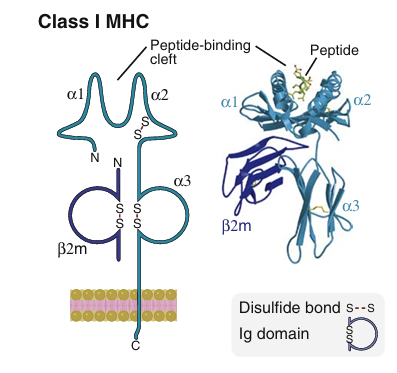
Structure of Class I MHC Molecules
 المؤلف:
Abbas, A. K., Lichtman, A. H., & Pillai, S
المؤلف:
Abbas, A. K., Lichtman, A. H., & Pillai, S
 المصدر:
Basic Immunology : Function and disorders of immune system
المصدر:
Basic Immunology : Function and disorders of immune system
 الجزء والصفحة:
6th ed , page 58-59
الجزء والصفحة:
6th ed , page 58-59
 2025-01-05
 1208
1208




+
-
20
Each class I MHC molecule consists of an α chain noncovalently associated with a protein called β2-microglobulin that is encoded by a gene outside the MHC. The α chain consists of three extracellular domains followed by transmembrane and cytoplasmic domains.
• The amino-terminal αl and α2 domains of the α chain form two walls and a peptide-binding cleft, or groove, that can accommodate peptides typically 8 to 9 amino acids long. The floor of the peptide-binding cleft contains amino acid residues that bind peptides for display to T lymphocytes, and the tops of the cleft
walls make contact with the T cell receptor (which also contacts part of the displayed peptide) . The polymorphic residues of class I molecules—that is, the amino acids that differ among different individuals' MHC molecules are located in the αl and α2 domains of the α chain. Most of these polymorphic residues contribute to variations in the floor of the peptide-binding cleft and thus influence the ability of different MHC molecules to bind distinct sets of peptides.
The α3 domain is invariant and contains a site that binds the CD8 T cell coreceptor but not CD4., T cell activation requires recognition of MHC-associated peptide antigen by the TCR and simultaneous recognition of the MHC molecule by the coreceptor. Therefore, CD8+ T cells can only respond to peptides displayed by class I MHC molecules, the MHC molecules to which the CD8 coreceptor binds.
 الاكثر قراءة في المناعة
 اخر الاخبار
اخبار العتبة العباسية المقدسة

الآخبار الصحية


مواضيع ذات صلة
 قسم الشؤون الفكرية يصدر كتاباً يوثق تاريخ السدانة في العتبة العباسية المقدسة
 "المهمة".. إصدار قصصي يوثّق القصص الفائزة في مسابقة فتوى الدفاع المقدسة للقصة القصيرة
 (نوافذ).. إصدار أدبي يوثق القصص الفائزة في مسابقة الإمام العسكري (عليه السلام)