Possible Problems
However, peer assessment must not be seen a magic potion to such problems faced by many educators and teachers, because there are still some practical issues that need to be considered during the implementation process.
Firstly, as suggested by Boud (2003), assessing outcomes related to peer learning may not make students engage more actively in it. Students might be put off by the idea of assessment by their peers. They might not trust and feel confident about themselves and their peers' judgement. This may eventually lead to a series of other unforeseen problems. It should also be noted that peer assessment can easily inhibit the processes it is designed for if it is not being implemented successfully (Boud et al., 2003).
Secondly, peer assessment relies heavily on the judgment and objectivity of the students involved, and this may cause problems if it is not being implemented thoughtfully and cautiously. Much recent research on peer assessment has been focused on its validity. It is not uncommon to learn that undergraduate students may not have been critical and subjective enough when they get the opportunity to mark their peers' work. Stefani (1994) reported that some students may misuse their power by under marking their peers in order to give themselves an advantage or avoid competition. It seems that it is difficult for the two parties to have the same standard on the severity and leniency when marking various tasks. The author has seen numerous cases of strong peer support driving such situations where all students in the group give each the same very high grades, i.e., the "you scratch my back and I'll scratch yours' scenario".
Moreover, some researchers (Boud et al., 2003; Cheng & Warren, 2005) have reported that there were significant differences in the rating given by the teacher and peer. Lacking experience and confidence in marking the work may possibly be part of the reasons for contributing to the problem of marking discrepancy. Students often reported a low level of comfort and a low degree of confidence in their ability to fairly and responsibly assess their peers' proficiency (Cheng & Warren, 2005)
Peer assessment is very often influenced by the objectivity of students rather than the subjectivity of the quality of work concerned. Peer assessment could be made more reliable if assessment criteria are given to students. Indeed, research has shown that how the assessors grade the work is highly dependent on the relationship between the learning outcomes and assessment criteria (Wilson, 2002). Teachers may consider giving the students an assessment checklist for them to use which can help to improve their ways to make fair judgment.
While this matter can to some extent be simply improved by giving students more training on peer assessment and to increase their understanding and knowledge of the criteria in order to make fair and critical judgments, it is also important to give students more practice on assessing peers' work so as to boost their marking confidence.
Another problem arises; the validity and reliability of Peer assessment is often compared and judged according to the grade given by the tutor. Moreover, how can one determine a fair and equitable standard or reference point? Falchikov (2000) reported that there is uncertainty about teacher reliability and validity. Thus, it does not seem appropriate to evaluate the reliability of peer assessment against tutor assessment if the teachers' ability to grade is under suspicion. A way to avoid such pitfalls may be to include grades from multiple teachers, average them out and then compare peer assessment against it (Langana et al., 2005). This however, can be a rather clumsy and time-consuming task.
In summary, the success rate of peer assessment is still quite unpredictable and varies from case to case. It is necessary to do more research to guide the widespread use of peer assessment.
In order to overcome the above mentioned problems, in this study, the use of peer assessment was purposely embedded into the teaching and learning strategy. The students were required to make use of decision making techniques they learnt from this subject for assessing their peers' work. Given a set of information and equipped with subject knowledge, students were requested to respond to a specified engineering problem in a prescribed approach.
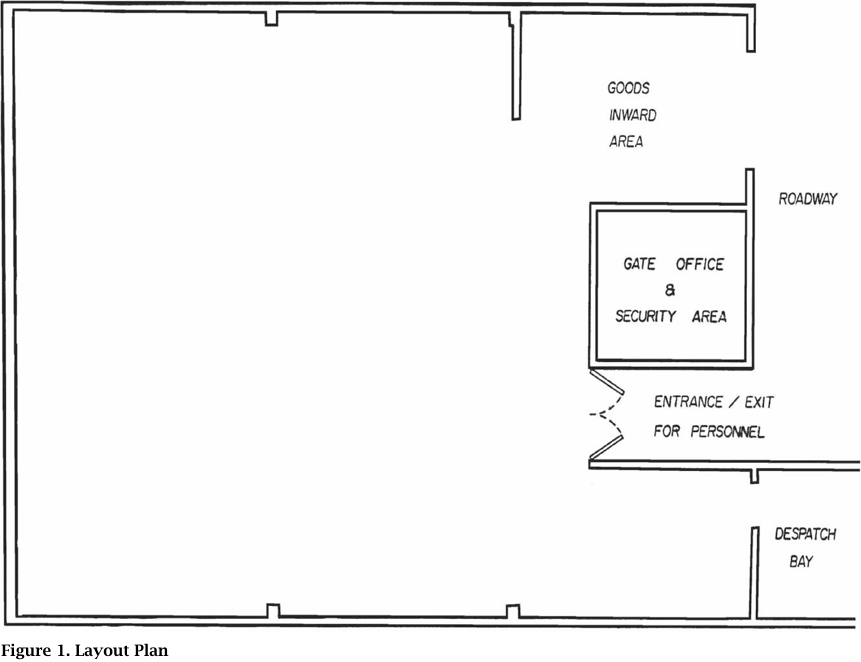
The interactive case study requires students to examine a typical layout planning case study whereby, they assess the work of other students. During the process, just enough information was provided to students to tackle the case. They then submitted and presented their solutions for others to assess after comments by the teacher.
Throughout the two 3-hour face-to-face sessions in the classroom, the students, organized into groups, are requested to experience the decision making process described in the case. With case discussion, students had the opportunity to develop their independent thinking and decision making skills through practice. Instead of just receiving facts and knowledge on topics to be covered in the subject, they were required to go further by focusing on what was learnt being put into the real practice.
Moreover, engineers like others professionals do not work alone. Real-life engineering problems are usually resolved by teamwork. The pedagogical design for peer assessment empowers groups of students to involve themselves in the decision making process which is likely occur in an engineering team. The design thus addresses the requirement of their workplace and the assessment component itself becomes authentic in its nature from the student perspective.