X IS LIKE Y: The emergence of similarity mappings in children’s early speech and gesture
The emergence of similarity mappings in children’s early spontaneous communications
The research just reviewed clearly shows that children can form similarity mappings by preschool age when tested in an experimental setting. However, we might find that children are able to convey similarity mappings even earlier if we look at their spontaneous language, particularly when that language is produced along with gesture, simply because a child’s initial grasp of an idea is often evident first in gesture. For example, children begin to produce combinations in which gesture conveys different information from speech (eat + POINT TO COOKIE) somewhere between ages 1;2–1;6, and gesture-speech combinations of this sort index oncoming changes in their speech. They combine words with gestures to create a sentence-like meaning (e.g., ride + POINT TO BIKE) several months before they combine words with other words to create a sentence (e.g., ride bike; Capirci, Iverson, Pizzuto and Volterra 1996; Goldin-Meadow and Butcher 2003; Greenfield and Smith 1976; Iverson and Goldin-Meadow 2005; Özçalı̡skan and Goldin-Meadow 2005a, 2005b). In fact, children routinely produce a number of constructions– argument+argument (mommy + POINT TO CUP), predicate + argument (peg + MOVE FIST UP AND DOWN AS IF HITTING), and predicate + predicate (I like it + MOVE HAND BACK AND FORTH TO MOUTH AS IF EATING)– first in a gesture-speech combination before producing each of these constructions entirely in speech (i.e., mommy cup; hammer the peg; I like eating it; Özçalı̡skan and Goldin-Meadow 2005a, 2006). Thus, a child’s ability to convey a construction across gesture and speech serves as an early signal that the child will soon be able to convey the same construction entirely within speech (Özçalı̡skan and Goldin-Meadow 2005a).
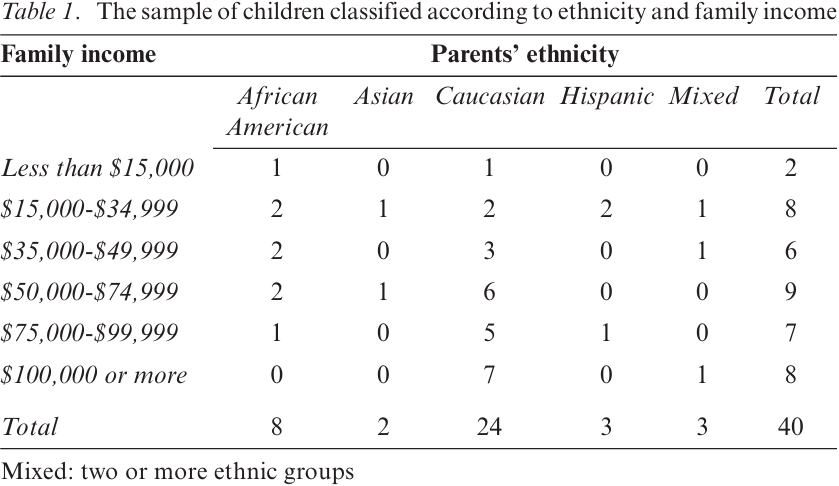
The question we pursue is whether children use gesture in combination with speech to convey similarity-based comparisons (like ice-cream cone + POINT TO A MUSHROOM CAP; I go like that over my cup + ROTATE FINGER IN AIR TO INDICATE STIRRING) before they convey these comparisons in their speech (e.g., bunny looks like me; the cow is like that cow there). Our aim is to identify the initial emergence and subsequent development of constructions that convey similarity mappings. We use longitudinal observations of 40 children, all raised as monolingual English speakers in the Chicago area, between ages 1;2 to 2;10. The children were videotaped for 90 minutes in their homes every four months while interacting with their primary caregivers in their everyday routines (see Table 1 for a summary of the sample categorized according to the ethnicity and the income level of the families). All meaningful sounds and communicative gestures were transcribed, and divided into communicative acts.1 We considered hand movements to be communicative gestures if they were used to convey information to a listener and did not involve direct manipulation of objects (e.g., banging a toy) or a ritualized game (e.g., patty cake). Sounds were considered meaningful words if they were used reliably to refer to specific referents or events; onomatopoeic sounds (e.g., meow, choo-choo) and conventionalized evaluative sounds (e.g., oopsie, uh-oh) were also included as words. Data were analyzed using ANOVAs, with either one (age) or two (age x domain, age x comparison type) within-subject factors, or chi-squares, as appropriate.
1. Communicative acts are words or gestures, alone or in combination, which were preceded and followed by a pause, a change in conversational turn, or a change in intonational pattern.








