الوضع الليلي


 2:47:10
  2019-06-29
  1567
1567

For its next mission in our solar system, NASA plans to fly a drone copter to Saturn's largest moon Titan in search of the building blocks of life, the space agency said Thursday.
The Dragonfly mission, which will launch in 2026 and land in 2034, will send a rotorcraft to fly to dozens of locations across the icy moon, which has a substantial atmosphere and is viewed by scientists as an equivalent of very early-era Earth.
It is the only celestial body besides our planet known to have liquid rivers, lakes and seas on its surface, though these contain hydrocarbons like methane and ethane, not water.
"Visiting this mysterious ocean world could revolutionise what we know about life in the universe, " said NASA administrator Jim Bridenstine.
"This cutting-edge mission would have been unthinkable even just a few years ago, but we're now ready for Dragonfly's amazing flight."
NASA said the vehicle would have eight rotors and fly like a large drone.
"During its 2.7-year baseline mission, Dragonfly will explore diverse environments from organic dunes to the floor of an impact crater where liquid water and complex organic materials key to life once existed together for possibly tens of thousands of years," NASA said in a statement.
"Its instruments will study how far prebiotic chemistry may have progressed. They also will investigate the moon's atmospheric and surface properties and its subsurface ocean and liquid reservoirs.
"Additionally, instruments will search for chemical evidence of past or extant life."
The craft will land first at the equatorial "Shangri-La" dune, exploring the region in short trips before building up to longer "leapfrog" flights of five miles (8 kilometres).
It will stop along compelling areas to collect samples before finally reaching the moon's Selk impact crater, where there is evidence of past liquid water, organic materials and energy: a potential primordial stew.
The hope is the lander will eventually fly more than 108 miles (175 kilometres).
Titan's atmosphere is made mostly of nitrogen, like Earth's, but is four times denser. Its clouds and rains are methane.
The second-largest moon in the solar system, Titan has a thick water ice crust, beneath which is an ocean made primarily of water.
The underground ocean could harbour life as we know it, while the hydrocarbon lakes and seas on the moon's surface could contain life forms that rely on different chemistries -- or the body could be lifeless.
Titan is about 886 million miles (1.4 billion kilometers) from the Sun, with surface temperatures of around -290 degrees Fahrenheit (-179 degrees Celsius) and surface pressure about 50 percent higher than Earth.
Reality Of Islam |
|

Researchers

New phononi
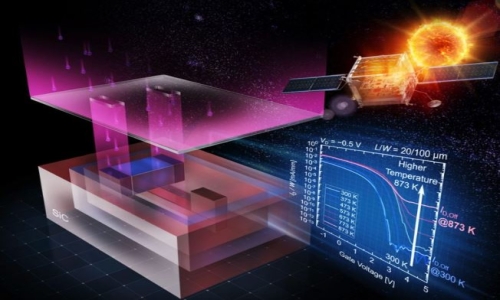
For more th
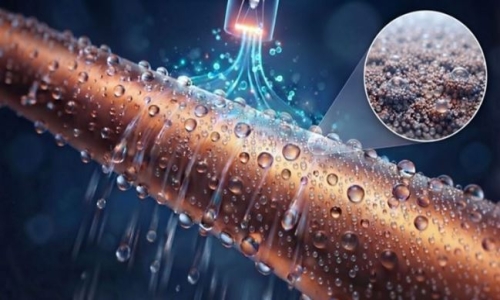
A new polym
 9:3:43
2018-11-05
9:3:43
2018-11-05
10 benefits of Marriage in Islam
7:5:22
2019-04-08
benefits of reciting surat yunus, hud &
9:45:7
2018-12-24
advantages & disadvantages of divorce
11:35:12
2018-06-10
6:0:51
2018-10-16
3:43:50
2022-11-05
6:28:21
2022-12-20
the happy life of mankind requirement
6:36:36
2022-01-25
11:2:27
2022-10-06
9:42:16
2022-10-19
7:32:24
2022-02-14
11:34:48
2022-06-29
5:41:46
2023-03-18
| LATEST |
 HOME
HOME