الوضع الليلي


 1:44:47
  2026-09-02
  686
686
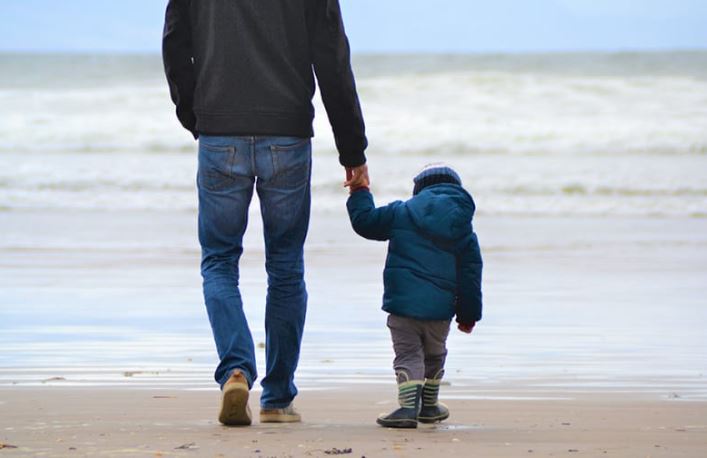
The type of fatherhood can only truly be understood by someone who is a father. For a father, there is no greater success in the world than the success of his child, and nothing in life is more painful than seeing that child fall. Yet a father's love is not spared from hardships either; sometimes, what he receives from his son is ingratitude, and even hostility.
On Father's Day, the father represents tenderness, security, and silent sacrifice.
The Father as a Source of Security for His Child
A child often has the impression that his father is the strongest, most knowledgeable, and most capable person within the family. He is the one who gives orders and faces various events and difficulties. The child turns to his father and considers him responsible for providing security. The child has repeatedly seen all family members turn to the father during difficult situations and sensitive circumstances, and practically does not believe that there is anyone more competent or capable than him.
The child has a strong need for security in all its forms. He needs economic security, discipline when facing various situations, intellectual and emotional security, and other forms of reassurance.
Therefore, it can be said that the father's role is not limited to providing the family's expenses and supplying food and clothing. He must also be present among his family members in order to provide them with security.
The father can be described within his family as a hero who accomplishes all tasks and compensates for every deficiency. What is the benefit of providing for the family's needs if the father is unable to provide security as well?
The father is also considered the link between the home and the outside world. He calms the fears of family members and encourages them to be patient and steadfast.
The father is the family's refuge and protector, and he must translate this concept into practical behavior for his children, because children need his support and protection in all matters. They will feel hopeless if they realize that their father is incapable of providing this.
A father should behave within his family in a way that allows the child to throw himself into his father's arms whenever he encounters danger and to feel secure when he is beside his father. This is essential for the child's healthy development and well-being. Therefore, the father must be courageous, bold, and able to withstand various difficulties. A father who becomes frightened or disturbed when he sees something frightening or faces a particular problem cannot provide security for his child. He should never reveal his anxiety or confusion in front of his child.
A child needs a brave and strong father who stands beside him during crises and problems and is capable of fulfilling his role and responsibility in providing psychological and moral security and stability. This is one of the child's essential needs, even during the earliest years of life.
Research and studies state that children who grow up without a father are up to 70% more likely to become involved in delinquent behavior than others. The absence of a father also affects a child's self-esteem and self-confidence. As for the absence of a father in a girl's life, it often leads to early feelings of depression and the emergence of unhealthy behavioral patterns, as she may express the loss of a male presence through a tendency to associate with boys or through what may later develop into an Electra complex.
The Authoritarian Father
Authoritarian behavior (or patriarchal fatherhood) and the desire for control constitute the traditional paternal model. To some extent, this model is still accepted and followed in many societies and is often practiced through the customs and traditions that dominate society and the family.
The fears and dangers created by authoritarian behavior on the part of the father are numerous and serious. The control he exercises through his role as a father may lead him to adopt certain positions not because he is personally convinced of them, but simply because his paternal role requires them. Thus, the image of the father as a social and traditional institution overshadows the father's true identity. This makes him a prisoner of a particular image that deprives him of his effective individuality and often draws him into internal psychological conflicts between what his convictions demand and what customs and traditions impose.
Many fathers of this type believe that giving up authoritarian behavior, even by offering a slight smile, will cause them to fall from their thrones and deprive them of their dignity and authority.
The negative effects of authoritarianism do not end with the father; they are passed on to the children. We often find a young father practicing fatherhood with extreme authoritarianism because the traditional paternal model has become deeply rooted in his unconscious mind.
The major problem is not simply the young father's authoritarianism, but the fact that his personality is often inconsistent with such behavior. This causes him to exaggerate threats, orders, punishment, embarrassment, and ridicule. As a result, the family becomes an arena of conflict and disagreement, a courtroom for issuing accusations and punishments, and an environment in which life becomes difficult and communication between family members is reduced to orders and prohibitions.
The children's response may take one of two forms: either stubbornness and self-defense against this oppression, or submission and absorption of the same behavior. In both cases, we find ourselves facing behaviors that require treatment and correction.
The children's feeling of oppression during childhood as a result of the father's authoritarianism has a major effect on how they later treat their own children. They may either absorb this behavior and reproduce it, develop feelings of revenge that they try to express toward their children, or make every effort not to pass this oppression on to their children. Even then, however, their attitudes may be influenced by this experience, as they may continually act from that feeling rather than from standards of what is right and proper.
The Absent Father
The father's absence and failure to fulfill his educational and parental role may be due to the circumstances surrounding him and his endless preoccupation outside the family. It may also result from an absolute fascination with the Western approach, which defines the parents' role as providing the basic necessities of life, such as food and clothing, while giving children complete freedom, eliminating parental supervision, and limiting the parents' role to weak guidance that makes little difference. As a result, the father withdraws from his educational role, believing that he is following the correct path and practicing modern parenting.
This reflects a serious misunderstanding of modern educational methods, which constitute an integrated system rather than merely a slogan meaning, “Let the child do whatever he wants.”
Many fathers return home late at night only to find their children fast asleep, and wake up to find that their children have already gone to school. And so on. Days may pass without fathers even seeing their children. In reality, these children have a father whose relationship with them does not extend beyond the fact that he was the reason for their existence. They do not, however, have fatherhood in its broad educational sense: the fatherhood of guidance, upbringing, giving, experience, and knowledge.
The mere presence of such a father among his children, even in silence, has profound educational value. It represents a sacrifice of his time, demonstrates his appreciation of them, creates a sense of participation, and provides reassurance. What, then, if the father speaks positively while he is with them, solves a problem, or discusses their concerns? In doing so, he breaks down the barriers between himself and his children and explores the depths of their minds and feelings. He may even become a planner of their lives outside the family in a way that contributes to their success.
The Father Who Becomes a Mother
The birth of a new child means the arrival of a new member within the family. This event may leave some fathers confused and uncertain about their new role toward the newborn. They may lose their balance, unable to comprehend that they have become fathers, unsure how they should deal with the new situation, or how they should behave.
This behavior may occur among people with fragile personalities, low self-confidence, or insufficient social preparation to bear the responsibilities of a family with several members.
Faced with this confusing situation, the father finds himself with two choices: either withdraw, becoming the type of absent father mentioned earlier, or completely copy the mother's role—performing the same tasks and behaving in the same way as a mother, taking upon himself the mother's responsibilities and roles. This is the type referred to here as the “father who becomes a mother.”
The Warrior Father
Sometimes the family experiences an open conflict between the father and his children. In this situation, the father may be the type who cannot imagine himself as a “man” except through violence, arrogance, and conceit, declaring war on his children. He believes that his manhood is connected to violence, quarrels, and disputes that he creates with his children, through which he demonstrates his ability, strength, and physical power.
Through this approach, he presents what he considers a positive image or model to his children. The warrior father is always driven by an inner feeling that his children are enemies, along with extreme sensitivity toward them. He is like a driver who considers every other driver around him a competitor on a racetrack, taking every possible measure to ensure that no one takes what he believes is his right or overtakes him. He focuses all his attention on watching others so that he can respond with strength and aggression.
Even the simplest mistake can turn into a heated battle between him and his children, during which he insults them. Instead of providing the children with educational or moral values, this behavior makes them live constantly on edge, in a state of tension and apprehension.
Reality Of Islam |
|

Two experim
Changing a

Plants are
After spend
 9:3:43
2018-11-05
9:3:43
2018-11-05
10 benefits of Marriage in Islam
7:5:22
2019-04-08
benefits of reciting surat yunus, hud &
9:45:7
2018-12-24
advantages & disadvantages of divorce
11:35:12
2018-06-10
6:0:51
2018-10-16
10:35:40
2022-05-26
8:39:51
2022-09-23
8:25:12
2022-03-09
2:42:26
2023-02-02
9:50:37
2023-02-28
8:15:37
2023-02-16
7:26:19
2022-04-08
5:41:46
2023-03-18
| LATEST |
 HOME
HOME