الوضع الليلي


 1:9:31
  2023-09-07
  4483
4483
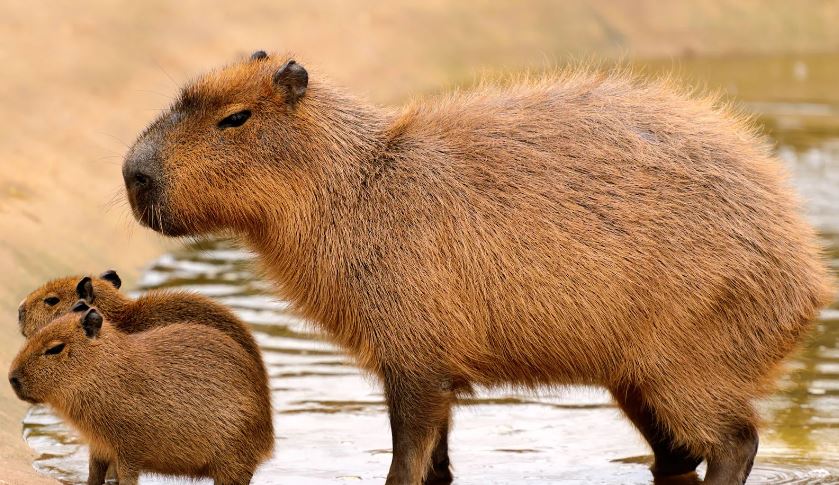
You thought the beaver was a rodent of unusual size? The capybara is twice that big—the biggest rodent on Earth. These impressive semi-aquatic mammals are found throughout much of northern and central South America, though a small invasive population has been seen in Florida. They’re closely related to guinea pigs and rock cavies, and more distantly related to chinchillas and agouti.
Like beavers, capybaras are strong swimmers. Their pig-shaped bodies are adapted for life in bodies of water found in forests, seasonally flooded savannas, and wetlands. Their toes are partially webbed for paddling around, and their reddish to dark brown fur is long and brittle—perfect for drying out quickly on land. Small eyes, noses, and hairless ears are located high on their heads so that their faces remain exposed and alert when most of their body is submerged.
Being alert is important when you’re often dinner for jaguars, pumas, and, in the water, caimans. Capybara young have even more to worry about—they are a favorite snack food of snakes like the boa constrictor, crab-eating foxes, small cats, and birds of prey like the caracara and black vulture.
Along with the seasons, the presence of predators affects what time of day capybaras are active—which may be day or night, and is often at dawn and dusk.
Like other rodents, capybaras’ teeth grow continuously, and they wear them down by grazing on aquatic plants, grasses, and other plentiful plants.
They also eat their own feces in the morning. That’s when their poo is protein rich from the high number of microbes digesting the previous day’s meals. Because the grasses they eat are so hard to digest, eating their waste essentially allows them to digest it twice.
Capybaras don’t mind being alone, but they also live in groups of up to 40. Their breeding season varies throughout the year depending on what habitat they live in and the availability of mates. Females usually have one litter of four to five young per year.
Though considered to have a stable population overall, in some areas capybaras are severely threatened by people who hunt them for their skin, and some local populations have been wiped out.
Reality Of Islam |
|

Two experim

Changing a

Plants are

After spend
 9:3:43
2018-11-05
9:3:43
2018-11-05
10 benefits of Marriage in Islam
7:5:22
2019-04-08
benefits of reciting surat yunus, hud &
9:45:7
2018-12-24
advantages & disadvantages of divorce
11:35:12
2018-06-10
6:0:51
2018-10-16
1:38:41
2021-12-08
6:0:8
2023-03-19
9:30:2
2021-11-12
the happy life of mankind requirement
6:36:36
2022-01-25
7:45:39
2018-06-21
2:5:14
2023-01-28
7:26:19
2022-04-08
5:41:46
2023-03-18
| LATEST |
 HOME
HOME