الوضع الليلي


 11:40:54
  2026-04-23
  985
985
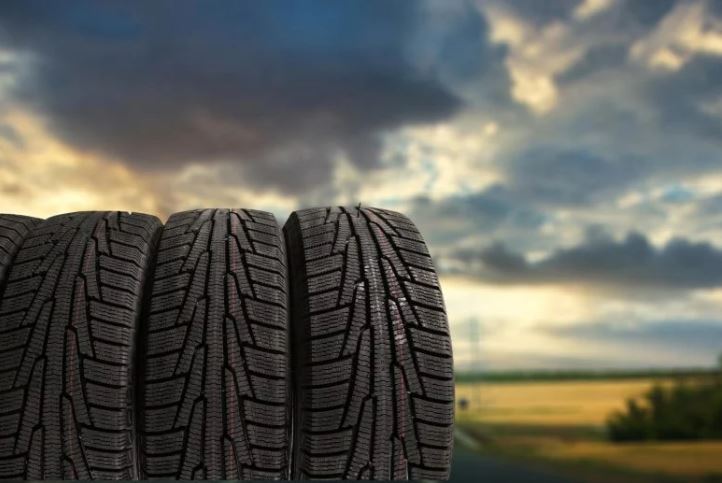
Every time you drive, fly on a plane, or even water your lawn, you depend on a material that has supported modern life for nearly a century: reinforced rubber. It is used in car and aircraft tires, industrial seals, medical devices, and countless everyday items. Despite its widespread use and its key role in the $260 billion global tire industry, scientists have long lacked a clear understanding of why it performs so well.
Until now.
A team led by University of South Florida engineering professor David Simmons has solved a longstanding mystery in materials science: how adding tiny particles called carbon black turns soft, flexible rubber into a material strong enough to carry the weight of a fully loaded jet. The findings, published in Proceedings of the National Academy of Sciences, provide an explanation and open the door to designing safer and more durable materials.
“How is it that we’ve been using this for 80, 90, 100 years and haven’t really known how it works?” Simmons said. “It’s been through enormous trial and error. The tire companies can purchase many different grades of carbon black – basically fancy soot – and they just have to use trial and error to figure out what’s worth paying more for and what isn’t.”
Cracking a Century-Old Scientific Debate
After running 1,500 molecular dynamics simulations, equivalent to about 15 years of computing time, the researchers brought together several competing theories and identified the underlying mechanism. They found that a phenomenon known as Poisson’s ratio mismatch causes rubber to resist changes in its own volume.
The formula for reinforced rubber has remained largely unchanged for decades. When microscopic particles, typically carbon black, are mixed into rubber, the material becomes much stronger and more durable. This is why tires are black and can withstand years of heat, wear, and repeated stress.
Even so, scientists have struggled to explain exactly why this happens, leading to what Simmons described as “a major debate for multiple decades now.”
Some researchers believed the particles formed chain-like structures within the rubber. Others suggested the particles acted like an adhesive, stiffening the surrounding material. Another idea was that the particles simply took up space, forcing the rubber to stretch more.
None of these explanations fully accounted for the observed behavior.
Instead of trying to directly observe these nanoscale processes, which is extremely difficult, Simmons and his colleagues recreated them using computer simulations.
Working with USF postdoctoral scholar Pierre Kawak and doctoral student Harshad Bhapkar, the team modeled how hundreds of thousands of atoms interact inside reinforced rubber.
They improved existing models to better represent the structure of carbon black and how it spreads through rubber, allowing them to study the material in ways that experiments cannot.
“It’s not that we literally had a simulation running for 15 years,” Simmons said. “What it means is if you ran a calculation using your laptop for one hour and it used up the whole laptop with six cores, it would be six computing hours. We used USF’s large computing cluster with many, many cores for many months.”
The Key Insight: Rubber Resisting Itself
The central discovery involves Poisson’s ratio, which describes how a material changes shape when stretched.
Simmons compares this to pulling back the plunger of a sealed syringe filled with water. Because water is difficult to compress, pulling harder creates more resistance.
Rubber behaves in a similar way. When stretched, a typical rubber band becomes thinner as it gets longer, while its volume stays nearly the same.
However, when carbon black particles are added, they act like tiny supports that limit how much the rubber can thin. As the material stretches, it is forced to expand in volume, which it naturally resists.
As a result, the rubber effectively “fights against itself,” leading to a large increase in strength and stiffness.
Importantly, the new findings do not replace earlier theories but bring them together.
The team showed that previously proposed ideas, including particle networks, adhesive interactions, and space-filling effects, all contribute to this resistance to volume change. Rather than being separate explanations, they are different aspects of the same process.
By combining these ideas into one framework, the researchers developed the first complete explanation of how rubber is reinforced.
This progress came after earlier models failed to match real-world results. The team refined their approach by incorporating insights from past research, ultimately producing a model that closely matches observed behavior.
Implications for Tires and Beyond
The findings could have major implications for both manufacturers and consumers.
Tire design is often described using the “Magic Triangle,” which refers to the challenge of improving fuel efficiency, traction, and durability at the same time. Enhancing one or two of these qualities usually reduces the third.
Until now, companies have relied heavily on trial and error to manage these trade-offs, which is both costly and time-consuming.
With a clearer understanding of how reinforced rubber works, engineers can design materials with greater precision. This could lead to tires that last longer, perform better in wet conditions, and improve fuel economy at the same time.
“The struggle always is to get more than two of the three to be good, and this is where trial and error only gets you so far,” Simmons said. “With these findings, we’re laying a new foundation for rationally designing tires.”
The impact goes beyond tires. Reinforced rubber is widely used in critical systems, including power plants and aerospace technologies, where failures can have serious consequences.
In some cases, those failures have been catastrophic, such as the Space Shuttle Challenger disaster in 1986.
“If you remember, the reason the Challenger failed was a rubber gasket that got too cold,” Simmons said. “A lot of energy systems, power plants have rubber parts. Everybody’s had a garden hose that started leaking because a rubber gasket failed. Now imagine that happening in a power plant or a chemical plant.”
Reality Of Islam |
|

Researchers
New phononi
For more th
A new polym
 9:3:43
2018-11-05
9:3:43
2018-11-05
10 benefits of Marriage in Islam
7:5:22
2019-04-08
benefits of reciting surat yunus, hud &
9:45:7
2018-12-24
advantages & disadvantages of divorce
11:35:12
2018-06-10
6:0:51
2018-10-16
7:34:7
2023-02-28
7:45:39
2018-06-21
8:19:41
2018-06-21
8:3:0
2018-06-21
11:2:27
2022-10-06
8:15:37
2023-02-16
allah will not answer all your prayers
6:56:28
2022-01-01
5:41:46
2023-03-18
| LATEST |
 HOME
HOME