الوضع الليلي


 9:6:59
  2018-12-08
  1764
1764
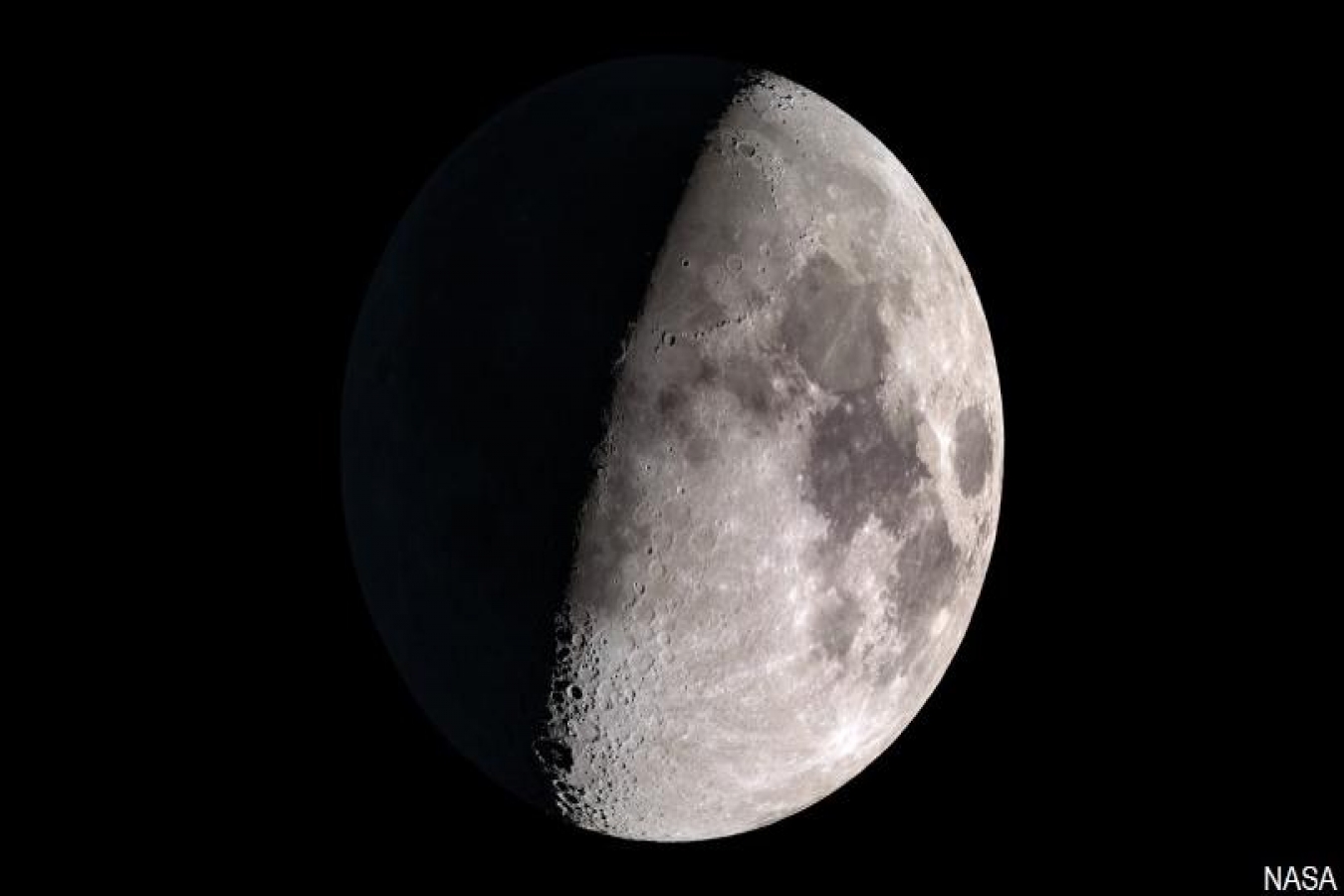
China was preparing to launch a ground-breaking mission early Saturday to soft-land a spacecraft on the largely unexplored far side of the moon, demonstrating its growing ambitions as a space power to rival Russia, the European Union and US.
With its Chang'e 4 mission, China hopes to be the first country to ever successfully undertake such a landing. The moon's far side is also known as the dark side because it faces away from Earth and remains comparatively unknown, with a different composition from sites on the near side, where previous missions have landed.
If successful, the mission scheduled to blast off aboard a Long March 3B rocket will propel the Chinese space program to a leading position in one of the most important areas of lunar exploration.
China landed its Yutu, or "Jade Rabbit." rover on the moon five years ago and plans to send its Chang'e 5 probe there next year and have it return to Earth with samples - the first time that will have been done since 1976. A crewed lunar mission is also under consideration.
Chang'e 4 is also a lander-rover combination and will explore both above and below the lunar surface after arriving at the South Pole-Aitken basin's Von Karman crater following a 27-day journey.
It will also perform radio-astronomical studies that, because the far side always faces away from Earth, will be "free from interference from our planet's ionosphere, human-made radio frequencies and auroral radiation noise," space industry expert Leonard David wrote on the website Space.com.
It may also carry plant seeds and silkworm eggs, according to the official Xinhua News Agency.
Chang'e is the goddess of the moon in Chinese mythology.
China conducted its first crewed space mission in 2003, making it only the third country after Russia and the US to do so. It has put a pair of space stations into orbit, one of which is still operating as a precursor to a more than 60-ton station that is due to come online in 2022. The launch of a Mars rover is planned for the mid-2020s.
To facilitate communication between controllers on Earth and the Chang'e 4 mission, China in May launched a relay satellite named Queqiao, or "Magpie Bridge," after an ancient Chinese folk tale.
China's space program has benefited from cooperation with Russia and European nations, although it was excluded from the 420-ton International Space Station, mainly due to US legislation barring such cooperation amid concerns over its strong military connections. Its program also suffered a rare setback last year with the delayed launch of its Long March 5 rocket.
China's latest mission closely follows the touchdown of NASA's InSight spacecraft on Mars on Monday, at a site less than 400 miles (640 kilometers) from the American rover Curiosity, the only other working robot on Mars.
Reality Of Islam |
|

Researchers

New phononi
For more th

A new polym
 9:3:43
2018-11-05
9:3:43
2018-11-05
10 benefits of Marriage in Islam
7:5:22
2019-04-08
benefits of reciting surat yunus, hud &
9:45:7
2018-12-24
advantages & disadvantages of divorce
11:35:12
2018-06-10
6:0:51
2018-10-16
5:58:12
2021-12-18
7:59:14
2018-06-21
8:25:12
2022-03-09
9:50:37
2023-02-28
1:16:44
2018-05-14
7:26:19
2022-04-08
7:32:24
2022-02-14
5:41:46
2023-03-18
| LATEST |
 HOME
HOME