الوضع الليلي


 1:3:39
  2025-01-25
  1602
1602
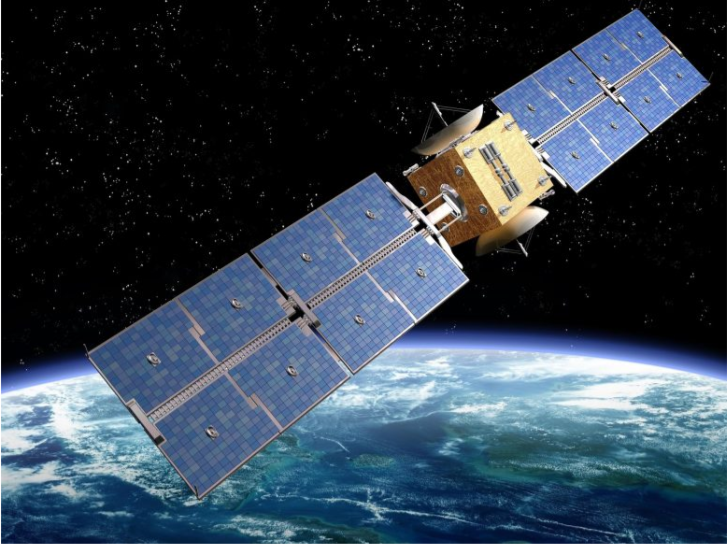
Researchers have created a 20-gram, self-deployable boom integrated with flexible electronics for use in CubeSats. The boom, made from thin carbon fiber composite, features sensors and LEDs that endure space’s harsh conditions and assist in deployment monitoring and visualization.
Lightweight design is crucial for space structures, especially for tools used on compact, lightweight satellites. Multifunctionality is an added advantage. Addressing these requirements in a novel way, researchers at the University of Illinois Urbana-Champaighn have successfully combined flexible electronics with a three-ply, self-deployable boom that weighs just 20 grams.
“It’s difficult to get commercial electronics integrated into these super thin structures,” said Xin Ning, an aerospace professor in The Grainger College of Engineering at U. of I. “There were a lot of engineering constraints adding to the challenge of making the electronics able to withstand the harsh environment of space.”
Collaboration Sparks Innovation
Ning said the concept for the work began at a conference about two years ago. He presented his unique expertise in making multifunctional space structures that integrate lightweight, flexible electronics.
“It got the attention of Juan Fernandez from NASA Langley Research Center. He was making a boom structure for a Virginia Tech CubeSat project and saw the opportunity to collaborate and add multi-functional devices to the structures instead of just a pure structure,” Ning said.
Ultimately, the boom to contain the electronics was made at NASA Langley Research Center, Ning said. It is a three-ply carbon fiber and epoxy composite material designed to be extremely thin—about as thick as a sheet of paper. It is rolled up like a tape measure with stored energy in its coils until it unfurls on its own in space.
Challenges and Practical Solutions
“Virginia Tech had specific requirements for us to follow, some that created challenges,” Ning said. “One was the length. They wanted to have power and data lines over a meter in length embedded in a paper-thin composite material. We tried different materials and different technologies.
“Eventually, we went with thin commercial wires coated with insulation and it worked. I think we were overthinking it at the beginning. We tried more difficult, fancier approaches, but they failed. This was a simple and reliable solution using off-the-shelf, readily available wires.”
Another key component is a lightweight, flexible electronics patch with a motion sensor, a temperature sensor, and a blue LED, all mounted on the boom tip. Ning explained that the electronics needed to endure the harsh thermal-vacuum conditions of space while remaining flexible enough to withstand the sudden unfurling of the coiled boom. The motion sensor monitors the deployment and vibration of the boom, and the blue LED assists CubeSat cameras in seeing the structure in space once deployed.
Ning’s team conducted comprehensive on-ground experiments and simulations to explore the mechanics of the bistable boom with flexible electronics, as well as its deployment and vibration behavior. Ning said that these fundamental studies could offer valuable insights for future designs of multifunctional space structures.
The Virginia Tech three-unit CubeSat with the multifunctional boom is aiming for launch in 2025.
“We are also working on making the flexible electronics more durable in space—ways to protect the electronics so they will be operational longer in the space environment.”
Reality Of Islam |
|

Researchers

New phononi
For more th

A new polym
 9:3:43
2018-11-05
9:3:43
2018-11-05
10 benefits of Marriage in Islam
7:5:22
2019-04-08
benefits of reciting surat yunus, hud &
9:45:7
2018-12-24
advantages & disadvantages of divorce
11:35:12
2018-06-10
6:0:51
2018-10-16
12:47:1
2022-12-20
9:50:37
2023-02-28
2:13:43
2022-05-27
8:4:21
2022-01-08
allah will not answer all your prayers
6:56:28
2022-01-01
4:2:19
2022-10-10
6:28:21
2022-12-20
5:41:46
2023-03-18
| LATEST |
 HOME
HOME