الوضع الليلي


 11:1:59
  2025-02-26
  1676
1676

Air travel produces around 2.5 percent of all global CO2 emissions, and despite decades of effort in developing alternative fuels or more efficient aircraft designs, that number hasn't budged much.
However, NASA – also the US's Aeronautics administration – has kept plugging away at trying to build a more sustainable future for air travel.
Recently, they supported another step in that direction by providing an Institute for Advanced Concepts (NIAC) grant to Phillip Ansell of the University of Illinois Urbana-Champaign to develop a hybrid hydrogen-based aircraft engine.
The grant focuses on developing the Hydrogen Hybrid Power for Aviation Sustainable Systems (Hy2PASS) engine, a hybrid engine that uses a fuel cell and a gas turbine to power an aircraft. Hybrid systems have been tried before, but Hy2PASS's secret sauce is its use of air handling.
In hybrid aircraft systems, there's typically a fuel cell and a gas turbine. The fuel cell takes hydrogen as an input and creates electrical energy as output. In a typical hybrid system, this electrical energy would power a compressor, whose output was directly coupled to turning the turbine.
However, in Hy2PASS, the compressor itself is decoupled from the turbine, though it still supplies oxygen to it. It then also supplies oxygen to the fuel cell's cathode, allowing for its continued operation.
This method has a few advantages, but the most significant one is the dramatic increase in efficiency it allows. The waste heat created at that mechanical connection is eliminated by uncoupling the compressor directly from the turbine.
Also, it allows the compressor to be run at different pressures, allowing an algorithm to optimize its speed while ignoring the necessary speed of the turbine.
Additionally, the emissions from the entire system are essentially just water. So, this hybrid system effectively eliminates the emissions created by this kind of hybrid engine altogether.
So, in theory, at least, this type of propulsion system would be the holy grail that NASA and the rest of the aviation industry have been seeking for years.
There's still a long way to go to make this system a reality. The Phase I NIAC grant will focus on proving the system's concept. Importantly, it will also require an understanding of another aircraft system and "mission trajectory optimization" to minimize the energy requirements of any future use case for the system.
That sounds like there would be some limitations for how the system might be used in practice, though fleshing that out as part of Phase I seems a reasonable use case.
If the project is successful, and given Dr Ansell's track record of consistently meeting NASA design objectives, that seems a good bet. It is possible that someday soon, a hydrogen-powered aircraft could be in the air again.
And this time, it will be a key player in eliminating emissions from one of the most important industries in the world.
Reality Of Islam |
|

Researchers

New phononi
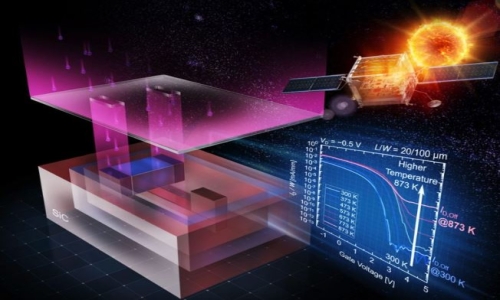
For more th
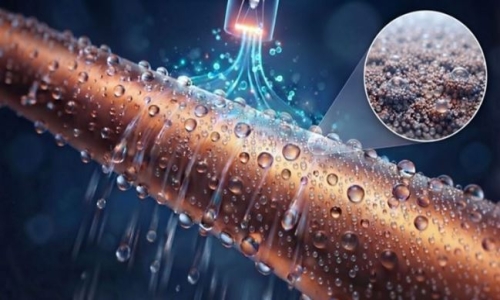
A new polym
 9:3:43
2018-11-05
9:3:43
2018-11-05
10 benefits of Marriage in Islam
7:5:22
2019-04-08
benefits of reciting surat yunus, hud &
9:45:7
2018-12-24
advantages & disadvantages of divorce
11:35:12
2018-06-10
6:0:51
2018-10-16
8:25:12
2022-03-09
4:26:43
2022-02-21
8:4:21
2022-01-08
12:10:56
2022-11-17
9:30:2
2021-11-12
9:42:16
2022-10-19
7:26:19
2022-04-08
5:41:46
2023-03-18
| LATEST |
 HOME
HOME