الوضع الليلي


 12:31:11
  2025-10-06
  1763
1763
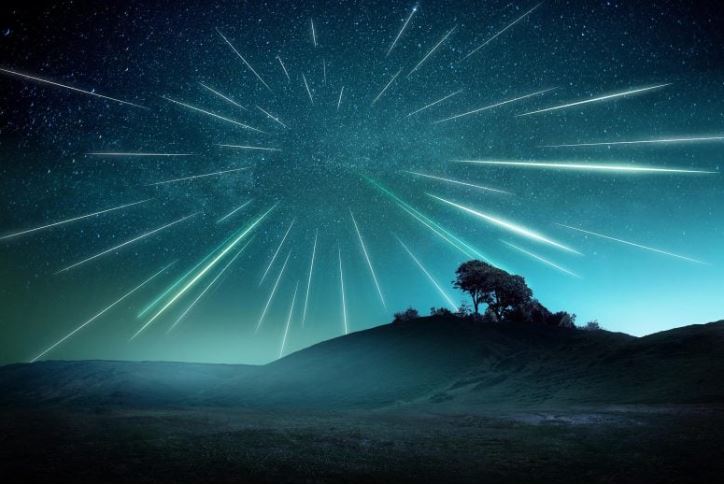
A supermoon, and meteor showers from the Draconids and Orionids
October brings a celestial lineup featuring a brilliant supermoon and two meteor showers. The Draconids blaze early in the month, while the Orionids steal the show later, streaking across dark skies illuminated only by stars. With Halley’s Comet debris lighting up the heavens, this month is a stargazer’s dream.
A supermoon takes over the sky, the Draconid meteor shower peeks through, and the Orionid meteor shower shines bright.
Skywatching Highlights
Video Transcript
What’s Up for October? A Supermoon takes over, the Draconid meteor shower peeks through, and the Orionid meteors sparkle across the night sky.
The evening of October 6, look up and be amazed as the full moon is bigger and brighter because – it’s a supermoon!
This evening, the moon could appear to be about 30% brighter and up to 14% larger than a typical full moon. But why?
Supermoons happen when a new moon or a full moon coincides with “perigee,” which is when the moon is at its closest to Earth all month.
So this is an exceptionally close full moon! Which explains its spectacular appearance.
And what timing – while the supermoon appears on October 6th, just a couple of days before on October 4th is “International Observe the Moon Night”!
It’s an annual, worldwide event when Moon enthusiasts come together to enjoy our natural satellite. You can attend or host a moon-viewing party, or simply observe the Moon from wherever you are.
So look up, and celebrate the moon along with people all around the world!
The supermoon will light up the sky on October 6th, but if you luck into some dark sky between October 6th and 10th, you might witness the first of two October meteor showers – the Draconids!
The Draconid meteor shower comes from debris trailing the comet 21P Giacobini-Zinner, burning up in Earth’s atmosphere
These meteors originate from near the head of the constellation Draco, the dragon, in the northern sky, and the shower can produce up to 10 meteors per hour!
The Draconids peak around October 8th, but if you don’t see any, you can always blame the bright supermoon and wait a few weeks until the next meteor shower – the Orionids!
The Orionid meteor shower, peaking on October 21, is set to put on a spectacular show, shooting about 20 meteors per hour across the night sky.
This meteor shower happens when Earth travels through the debris trailing behind Halley’s Comet and it burns up in our atmosphere.
The full duration of the meteor shower stretches from September 26 to November 22, but your best bet to see meteors is on October 21, before midnight until around 2 am.
This is because, not only is this night the shower’s peak, it is also the October new moon, meaning the moon will be between the Earth and the Sun, making it dark and invisible to us.
With a moonless sky, you’re much more likely to catch a fireball careening through the night.
So find a dark location after the sun has set, look to the southeast sky (if you’re in the northern hemisphere) and the northeast (if you’re in the southern hemisphere), and enjoy!
Orionid meteors appear to come from the direction of the Orion constellation, but you might catch them all across the sky.
Reality Of Islam |
|

Researchers

New phononi
For more th

A new polym
 9:3:43
2018-11-05
9:3:43
2018-11-05
10 benefits of Marriage in Islam
7:5:22
2019-04-08
benefits of reciting surat yunus, hud &
9:45:7
2018-12-24
advantages & disadvantages of divorce
11:35:12
2018-06-10
6:0:51
2018-10-16
5:57:34
2023-03-18
8:4:21
2022-01-08
10:35:40
2022-05-26
2:33:4
2023-02-15
8:30:23
2022-03-03
10:47:11
2022-11-22
2:13:43
2022-05-27
5:41:46
2023-03-18
| LATEST |
 HOME
HOME