الوضع الليلي


 1:29:22
 2026-11-14
 79
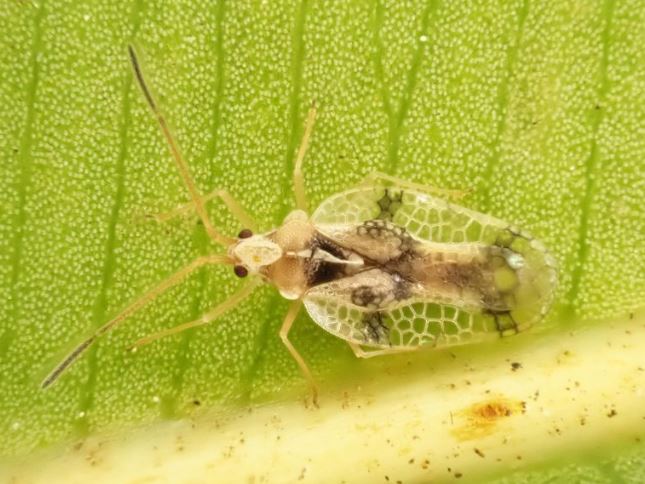
Lace bugs living on two groups of Japan’s remote Ogasawara Islands had been classified as a single species, despite differences in their diets and coloring. Comparisons of their DNA have now revealed that they belong to two species, a distinction supported by subtle physical differences.
The archipelago lies roughly 900 to 1,000 kilometers (560 to 620 miles) south of Tokyo and is a UNESCO World Natural Heritage site. Its land snails and plants are celebrated for including species found nowhere else. About 440 insect species are also known to be unique to the islands, but their evolution has received far less attention.
DNA distinguishes two lace bug species
Among those insects is Omoplax, a genus of lace bugs thought to have diversified rapidly across the islands. Jun Souma, of Hirosaki University’s Shirakami Research Center for Environmental Sciences, investigated these insects with Naoyuki Nakahama, of the Graduate School of Agriculture at Osaka Metropolitan University.
“The reason I took a particular interest in Omoplax desecta is that it feeds on both the native plant Rhaphiolepis indica var. tashiroi and the introduced plant Calophyllum inophyllum in the Chichijima island group,” Souma said. “This is quite unusual for lace bugs, which typically exhibit high host specificity. I was also intrigued by the fact that it is distributed across multiple island groups, which is different from other Omoplax species.”
To investigate relationships among the insects, the researchers analyzed 52 specimens using MIG-seq, a method that provides DNA data from across the genome. Populations classified as Omoplax desecta on the Chichijima and Hahajima island groups were genetically distinct. The study is published in the open-access journal ZooKeys.
The genetic evidence helped explain differences Souma had noticed in the Hahajima insects.
“I had wondered why it fed exclusively on Rhaphiolepis indica var. tashiroi and why there were no individuals with dark brown to black pronotum, which are sometimes seen in the Chichijima island group,” Souma explained. The pronotum is the plate just behind an insect’s head. “After conducting population genetic and phylogenetic analyses, I began to suspect that this population might be a distinct species. Upon closely observing their morphological characteristics, I was certain of this.”
Subtle differences in male genitalia confirmed the distinction. The Hahajima population is now described as Omoplax sandoru, named after the local name of its host plant.
A new diet could divide a species
For Omoplax desecta in the Chichijima group, the introduced tree offered another clue to how these insects might diversify. The DNA data indicate that its shift to feeding on Calophyllum inophyllum happened once, and recently. Whether that change will eventually produce another species remains a possibility rather than an established outcome.
“I also find it interesting that the introduction of Calophyllum inophyllum by humans may have led to a budding of future speciation in Omoplax desecta,” Souma added.
Lookalikes aren’t always the closest relatives
The researchers also reconstructed an evolutionary tree to trace relationships among the insects. That allowed them to test whether species with similar appearances and food preferences were one another’s closest relatives.
“The most surprising finding of my research was that species feeding on the same plant and appearing very similar are not necessarily sister groups,” said Souma, referring to groups that are each other’s closest evolutionary relatives. “Adaptive radiation among insects on oceanic islands may be more complex than comparisons of morphological characteristics and life histories would suggest at first glance.”
Adaptive radiation is the diversification of related organisms into species adapted to different ecological roles. Here, the findings point to both geographic isolation and shifts between host plants as drivers of species formation.
The researchers could not obtain DNA from two rare species, leaving gaps in the evolutionary picture. Further sampling will be needed to trace how these insects reached the islands and diversified.
Reality Of Islam |
|

Researchers

A new break

Scientists

Tiny magnet
 9:3:43
2018-11-05
10 benefits of Marriage in Islam
7:5:22
2019-04-08
benefits of reciting surat yunus, hud &
9:45:7
2018-12-24
advantages & disadvantages of divorce
11:35:12
2018-06-10
6:0:51
2018-10-16
6:14:17
2018-06-21
8:4:21
2022-01-08
7:32:24
2022-02-14
al-hussain (peace be upon him)
10:18:1
2022-09-21
10:55:53
2022-06-13
9:39:36
2022-12-28
4:26:43
2022-02-21
5:41:46
2023-03-18
| LATEST |
 HOME