الوضع الليلي


 5:32:57
  2019-08-15
  1664
1664
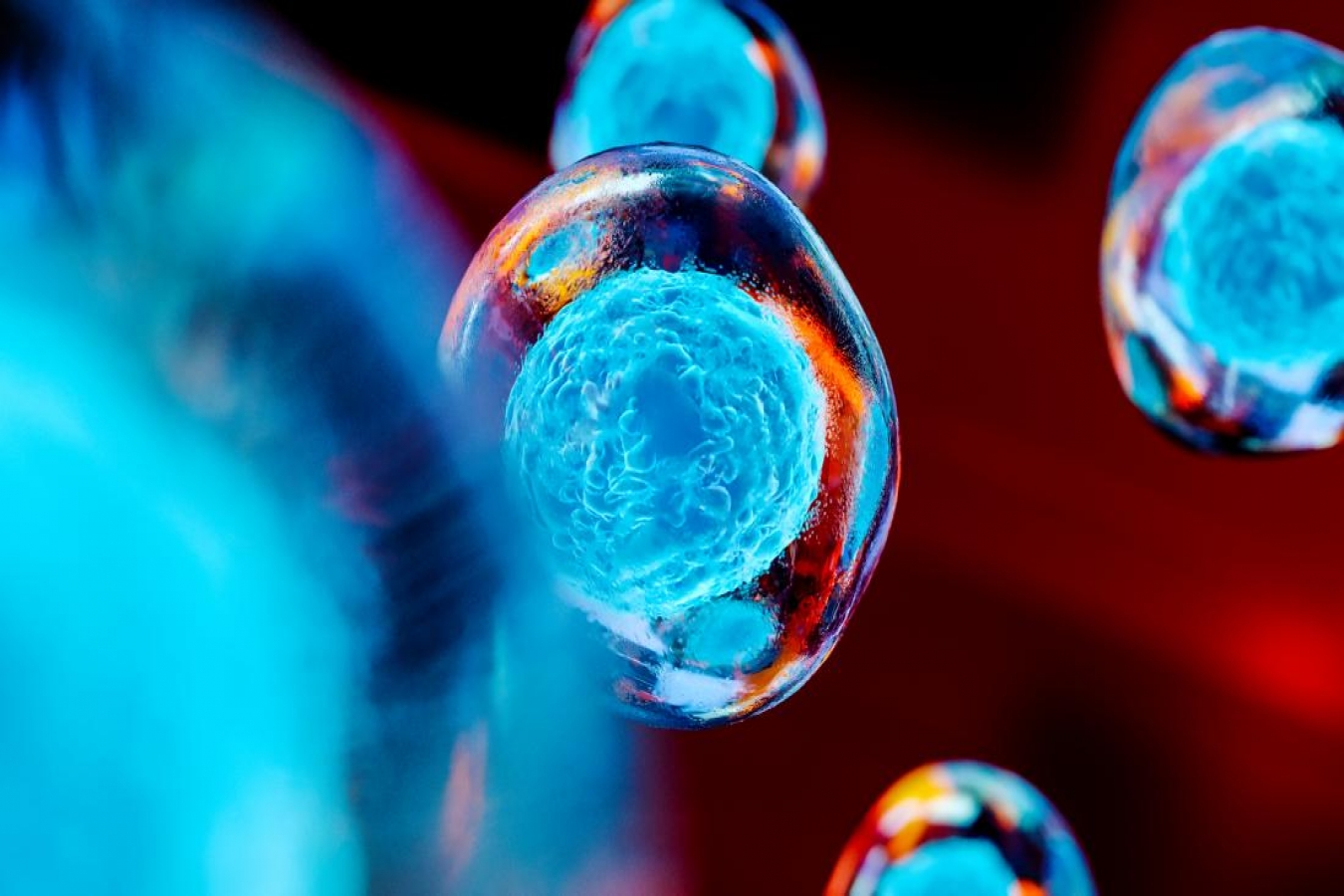
Scientists have found a way to make older brain stem cells in rats more youthful. The discovery could lead to improved treatments for aging-related diseases that degrade the brain and nervous system.
The research concerns oligodendrocyte progenitor cells (OPCs), which are a type of stem cell, or immature cell. OPCs are essential for the healthy functioning of the brain and the rest of the central nervous system.
OPCs mature, or differentiate, into oligodendrocytes, which are the cells that produce the myelin sheath that surrounds nerve fibers and preserves the electrical signals that they carry.
Destruction of myelin is a distinguishing feature of multiple sclerosis (MS), and aging-related changes to OPCs contribute to the process. Aging can also reduce OPC function in healthy individuals.
Researchers at the University of Cambridge in the United Kingdom found that increasing stiffness in the aging brain impairs the function of OPCs.
When they transplanted OPCs from older rats into the brains of younger rats, the aged OPCs began to function like youthful OPCs.
Stiffening of stem cell niche
The team eventually established that the loss of function in the OPCs was a result of something happening in their microenvironment, or stem cell "niche."
"Here we show," write the authors in a recent Nature paper, "that the OPC microenvironment stiffens with age, and that this mechanical change is sufficient to cause age-related loss of function of OPCs."
It appears that the stem cell niche reflects the aging-related changes in the "chemical and mechanical signals" that it sends to the OPCs residing in it.
Once the transplanted aged OPCs sensed that they were in a more youthful, soft environment, they began to behave more like vigorous, younger OPCs.
To explore what was going on in more detail, the team ran some laboratory experiments with OPCs and "biological and synthetic scaffolds to mimic the stiffness of young brains."
'Molecularly and functionally rejuvenated'
The researchers observed that when they grew aged OPCs on soft material scaffolds, they started to behave more like youthful OPCs.
The aged OPCs were "molecularly and functionally rejuvenated" as a result of being on the softer material.
Conversely, placing young OPCs on scaffolds comprising stiffer material, caused them to behave like older ones.
"We were fascinated," says co-senior study author Dr. Kevin J. Chalut, "to see that when we grew young, functioning brain stem cells on the stiff material, the cells became dysfunctional and lost their ability to regenerate, and in fact began to function like aged cells."
Dr. Chalut works in the Department of Physics and the Stem Cell Institute at the University of Cambridge.
He observes, however, that the more interesting finding was seeing the old OPCs growing in the soft material, and how "they began to function like young cells — in other words, they were rejuvenated."
"This suggests a new way forward to override the age-related loss of function in this important stem cell system," he adds.
Piezo1 signals niche stiffness
Further investigation led Dr. Chalut and his colleagues to focus on a "mechanoresponsive ion channel" called Piezo1, a protein that sits on the surface of OPCs. They found that Piezo1 tells the OPCs whether their niche is stiff or soft.
When they tested the reaction of aged OPCs lacking Piezo1, the researchers found that the stem cells behaved like youthful OPCs, even when they were growing on the stiffer scaffolding material.
They also found that deleting Piezo1 in the OPCs in the brains of aged rats led to the stem cells behaving like they were young again. The cells resumed their normal ability to regenerate.
The MS Society, which is a registered charity in England and Wales in the U.K., part-funded the study. Their director of research, Dr. Susan Kohlhaas, says that the findings "have important implications" for the treatment of MS.
"MS is relentless, painful, and disabling, and treatments that can slow and prevent the accumulation of disability over time are desperately needed." Dr. Susan Kohlhaa
Source: Medical News Today
Reality Of Islam |
|
Researchers

New phononi

For more th
A new polym
 9:3:43
2018-11-05
9:3:43
2018-11-05
10 benefits of Marriage in Islam
7:5:22
2019-04-08
benefits of reciting surat yunus, hud &
9:45:7
2018-12-24
advantages & disadvantages of divorce
11:35:12
2018-06-10
6:0:51
2018-10-16
2:5:14
2023-01-28
12:47:1
2022-12-20
8:30:23
2022-03-03
10:47:11
2022-11-22
4:25:57
2023-02-11
11:11:59
2023-02-01
5:58:12
2021-12-18
5:41:46
2023-03-18
| LATEST |
 HOME
HOME