الوضع الليلي


 7:56:39
  2023-09-06
  2703
2703
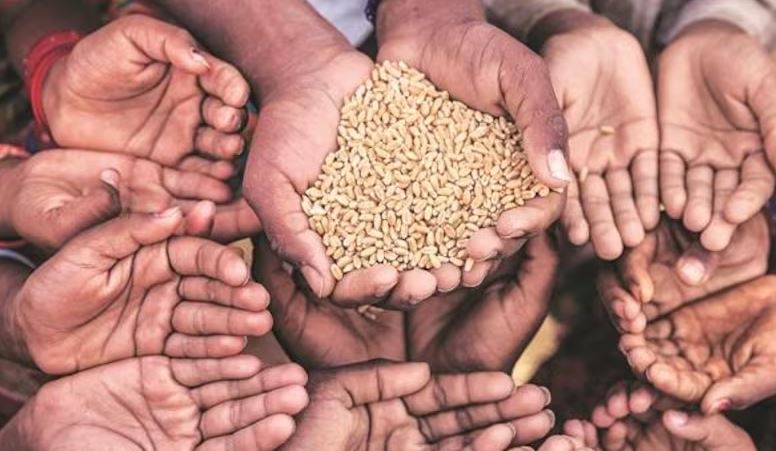
Essentially, poverty refers to lacking enough resources to provide the necessities of life—food, clean water, shelter and clothing. But in today’s world, that can be extended to include access to health care, education and even transportation. In government circles, poverty is often further defined as “absolute poverty” and “relative poverty” (more on that below).
Every country has its own measure for poverty. However, a widely recognized authority on the topic of “extreme poverty” is the World Bank. The Bank keeps a metric called the International Poverty Line and, as of 2015, set the definition of extreme poverty as those who live on less than US$1.90 per day. (Those living on between $1.90-$3.10 per day are classified as the “moderate poor.”) This number is based on the monetary value of a person’s consumption rather than income alone.
In September 2022, the World Bank periodically updated the global poverty lines using new purchasing power parities (PPPs). The $2.15 per person per day extreme poverty line replaces the $1.90 poverty line, based on 2017 PPPs.
What is the difference between absolute poverty and relative poverty?
Absolute poverty refers to those whose incomes fall below a line set by a given country. Below this line people are unable to meet their basic needs for food, water and shelter. They also have no access to social services such as health care, education and utilities.
Relative poverty refers to people whose total incomes are less than a certain percentage—typically 50%--of the country’s median income. Because the median income can vary as a result of economic growth, the line for relative poverty can change. When poverty is defined to include access to services and security critical to well-being—and not just income and consumption— the global poverty rate increase by 50 %.
No. Common perceptions of poverty consider income and consumption alone. However, there are significant approaches that say other factors must be included. This is because money doesn’t tell the whole story. (Typically, when the poor describe their poverty they do so in ways that go beyond simply not having enough money.) Examples of such approaches include the Multidimensional poverty index (MPI) and the Human Development Index (HDI).
The MPI is supported by the United Nations Development Program. It measures poverty across three dimensions—health, education and standard of living. It then further breaks these down into 10 indicators:
Reality Of Islam |
|
Two experim

Changing a
Plants are

After spend
 9:3:43
2018-11-05
9:3:43
2018-11-05
10 benefits of Marriage in Islam
7:5:22
2019-04-08
benefits of reciting surat yunus, hud &
9:45:7
2018-12-24
advantages & disadvantages of divorce
11:35:12
2018-06-10
6:0:51
2018-10-16
8:21:9
2018-06-21
7:26:19
2022-04-08
1:16:44
2018-05-14
8:30:23
2022-03-03
11:2:27
2022-10-06
5:58:12
2021-12-18
2:2:13
2022-10-08
5:41:46
2023-03-18
| LATEST |
 HOME
HOME