الوضع الليلي


 10:48:5
  2024-04-27
  1806
1806
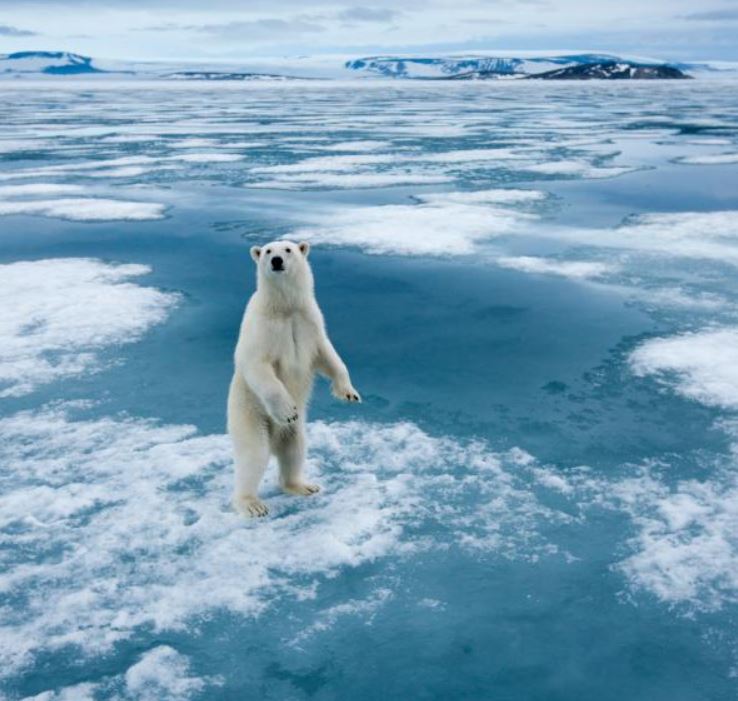
Scientific researchers have recently identified a sub-population of polar bears in southeastern Greenland that survive by hunting on glacial slush. The discovery of their unique behaviors is helping scientists understand the future of this species whose habitats are threatened by climate change.
Polar bears, Ursus maritimus, rely on glacial ice to hunt, travel, rest, and mate. With the increased loss of their habitat due to climate change, scientists have become more concerned with understanding how polar bears might adapt their behaviors when their habitat and hunting patterns are threatened.
In southeastern Greenland, scientists have started to understand the adapting habits of these ‘sea bears’ by studying a newly discovered subgroup of polar bears that hunt and live differently. This group of a few hundred bears is the most genetically distinct population that has been scientifically documented. Within the southeastern region, heavy snowfall and chaotic weather patterns make studies like these difficult but ecology teams were able to use heavy-duty helicopters and strategically stashed fuel to study the bears on and off-site.
Researchers believe that this group of polar bears are so genetically distinctive because of the isolation they face within their habitat. Tucked away in the mountainous regions of the Greenland Ice Sheet and between vast fjords and steep cliffs, polar bears are forced to remain within similarly isolated areas. Without the proximity to sea ice for around 70% of the year, these mammals adapt by utilizing floating blocks of broken-off glacial ice to hunt their favorite prey, seals. This study marks the first time that polar bears have been seen using frozen freshwater for the majority of the year. With the area’s sea ice decreasing, this research team believes that the slushy glaciers areas are used as a new hunting ground in the ever-warming Arctic ice.
In this dynamic and unforgiving environment, these polar bears stayer closer to home when compared to the average polar bears. Researchers found that these female polar bears cover a distance of just 10 kilometers in 4 days when compared to around 40 kilometers of the average female bear in the northeastern region of Greenland. While these resilient polar bears can give us a clue into the future of the species, researchers note that environments like these are rare outside of Greenland and that this hopeful study does not change the severity of the declining sea ice. The researchers hope to use their findings as a starting point to spark preservation efforts and conservation. Lead researcher and ecologist at the University of Washington’s Polar Science Center, Kristin L. Laidre expressed, “They’re an important group because they can help us look into the future.”
Reality Of Islam |
|
Two experim

Changing a
Plants are

After spend
 9:3:43
2018-11-05
9:3:43
2018-11-05
10 benefits of Marriage in Islam
7:5:22
2019-04-08
benefits of reciting surat yunus, hud &
9:45:7
2018-12-24
advantages & disadvantages of divorce
11:35:12
2018-06-10
6:0:51
2018-10-16
3:18:29
2022-12-24
7:32:24
2022-02-14
8:15:37
2023-02-16
7:34:7
2023-02-28
1:16:44
2018-05-14
8:19:41
2018-06-21
12:47:1
2022-12-20
5:41:46
2023-03-18
| LATEST |
 HOME
HOME