الوضع الليلي


 4:44:8
  2024-07-06
  1914
1914
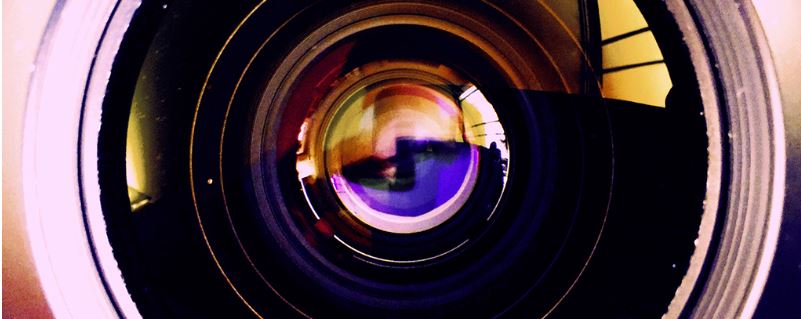
To take a picture, the best digital cameras on the market open their shutter for around around one four-thousandths of a second.
To snapshot atomic activity, you'd need a shutter that clicks a lot faster.
With that in mind, scientists have unveiled a way of achieving a shutter speed that's a mere trillionth of a second, or 250 million times faster than those digital cameras. That makes it capable of capturing something very important in materials science: dynamic disorder.
Simply put, it's when clusters of atoms move and dance around in a material in specific ways over a certain period – triggered by a vibration or a temperature change, for example. It's not a phenomenon that we fully understand yet, but it's crucial to the properties and reactions of materials.
The new super-speedy shutter speed system, revealed in 2023, gives us much more insight into what's happening with dynamic disorder. The researchers are referring to their invention as variable shutter atomic pair distribution function, or vsPDF for short.
"It's only with this new vsPDF tool that we can really see this side of materials," said materials scientist Simon Billinge from Columbia University in New York.
"With this technique, we'll be able to watch a material and see which atoms are in the dance and which are sitting it out."
A faster shutter speed captures a more precise snapshot of time, which is helpful for quickly moving objects like rapidly jittering atoms. Use a low shutter speed in a photo of a sports game, for instance, and you'll end up with blurred players in the frame.
To achieve its astonishingly quick snap, vsPDF uses neutrons to measure the position of atoms, rather than conventional photography techniques. The way that neutrons hit and pass through a material can be tracked to measure the surrounding atoms, with changes in energy levels the equivalent of shutter speed adjustments.
Those variations in shutter speed are significant, as well as the trillionth-of-a-second shutter speed: they're vital in picking out dynamic disorder from the related but different static disorder – the normal background jiggling on the spot of atoms that don't enhance a material's function.
"It gives us a whole new way to untangle the complexities of what is going on in complex materials, hidden effects that can supercharge their properties," said Billinge.
In this case, the researchers trained their neutron camera on a material called germanium telluride (GeTe), which because of its particular properties is widely used to convert waste heat into electricity, or electricity into cooling.
The camera revealed GeTe remained structured as a crystal, on average, at all temperatures. But at higher temperatures it displayed more dynamic disorder, where the atoms exchanged motion into thermal energy following a gradient that matches the direction of the material's spontaneous electric polarization.
Better understanding these physical structures improves our knowledge of how thermoelectric works, enabling us to develop better materials and equipment – such as the instruments powering Mars rovers when sunlight isn't available.
Through models based on observations captured by the new camera, the scientific understanding of these materials and processes can be improved. However, there's still plenty of work to do to get vsPDF ready to be a widely used method of testing.
"We anticipate that the vsPDF technique described here will become a standard tool for reconciling local and average structures in energy materials," the researchers explained in their paper.
Reality Of Islam |
|
Researchers

New phononi
For more th
A new polym
 9:3:43
2018-11-05
9:3:43
2018-11-05
10 benefits of Marriage in Islam
7:5:22
2019-04-08
benefits of reciting surat yunus, hud &
9:45:7
2018-12-24
advantages & disadvantages of divorce
11:35:12
2018-06-10
6:0:51
2018-10-16
4:26:43
2022-02-21
9:39:36
2022-12-28
8:39:51
2022-09-23
2:5:14
2023-01-28
10:43:56
2022-06-22
7:45:39
2018-06-21
8:19:41
2018-06-21
5:41:46
2023-03-18
| LATEST |
 HOME
HOME