الوضع الليلي


 5:35:12
  2024-10-22
  1854
1854
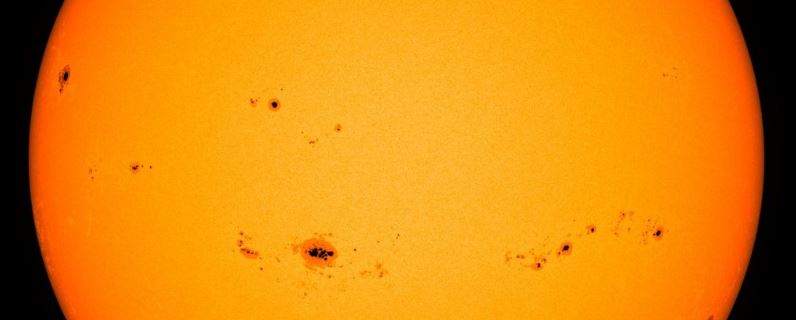
Brace yourselves, Earthlings: NASA, the NOAA, and the Solar Cycle Prediction Panel have officially declared that solar maximum is now underway.
What does that mean? Our Sun is reaching the peak of its 11-year activity cycle, a time when sunspots, solar flares, and coronal mass ejections are rampant. So we're going to continue to see a lot of ruckus from the Sun in the months ahead.
At some point amid all this ballyhoo and brouhaha, the Sun's magnetic poles will switch places and activity will start to subside, heading towards the lull in the solar cycle known as solar minimum. But we're not going to know when precisely this will occur until solar maximum is long over.
"This announcement doesn't mean that this is the peak of solar activity we'll see this solar cycle," says meteorologist Elsayed Talaat of NOAA. "While the Sun has reached the solar maximum period, the month that solar activity peaks on the Sun will not be identified for months or years."
The Sun is a dependable presence in our lives, and that's good news for us because it's vital for our very existence on this planet. But that doesn't mean the Sun is intrinsically constant: our star undergoes changes of its own, one cycle of which is the 11-year activity cycle.
We don't know much about what drives these cycles, to be honest: figuring out what's happening inside the Sun is actually pretty hard to do. And although each cycle is roughly 11 years long, they vary in exact length. Precisely how long isn't something we can predict with any certainty, nor how strong it will be, or even when maximum and minimum are due to take place.
"We can't reliably predict solar cycles," solar astrophysicist Michael Wheatland of the University of Sydney, Australia told Science Alert in 2022. "We don't completely understand the solar dynamo, which generates the magnetic fields seen at the surface as sunspots, and which produce flares. This is one of the outstanding problems in astrophysics."
But we do know how a solar cycle manifests, and solar scientists and meteorologists can use those manifestations to track the cycle.
The key metric is sunspots – regions on the surface of the Sun where the magnetic field is temporarily extra-strong and tangled, inhibiting the flow of hot plasma, which makes the region cooler and darker than the surrounding solar surface.
Solar minimum is when sunspots are at their fewest. Solar maximum is when sunspots speckle the surface like freckles across a sunkissed nose. And with them come huge solar outbursts.
When the tangled magnetic field lines in sunspots snap and reconnect, they erupt in powerful bursts of light and energy; those are solar flares. And sometimes they also violently expel billons of tons of solar particles and magnetic fields, rocketing through the solar system; those are coronal mass ejections.
Both phenomena can have an effect on Earth. Solar flares can result in radio blackouts. Coronal mass ejections, when they slam into the magnetic field shielding Earth, beget a phenomenon known as geomagnetic storms.
These can be more hazardous, generating currents that can interfere with power grid operations, impede communication and navigation, and infringe upon satellite operation. But they also produce stunning auroras as the solar particles interact with particles in Earth's upper atmosphere. That's why we've been seeing so many aurora events this year.
But we're not in danger, as far as we can tell. It's true that the current solar cycle is significantly stronger than the initial predictions made by NASA and the NOAA, but it's not the strongest solar cycle that we've ever seen, and it's still within normal limits. The most powerful flare of the current cycle was an X9.0 that erupted on 4 October, and while that sits within the top 20 ever measured, there are some absolute monsters on that list that you probably didn't even notice.
Meanwhile, some interesting analysis is yet to be done. While the official predictions about the solar cycle were lower than what took place, some scientists did predict a strong cycle, with much more accuracy. This could have some pretty interesting implications for our understanding of how the Sun works, and the models we use to predict solar cycles in the future.
So strap in. We might be in for some stormy space weather. And some fascinating new insights into the mysterious ways of our magnificent Sun.
Reality Of Islam |
|
Researchers

New phononi
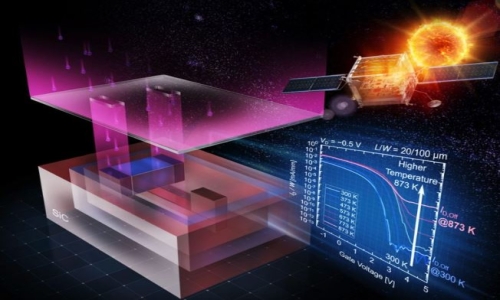
For more th
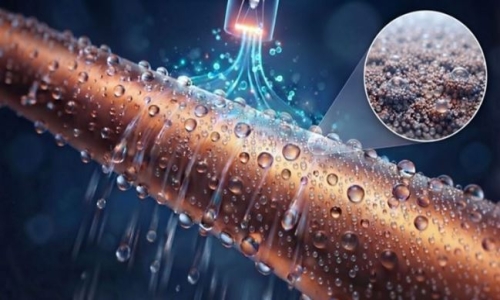
A new polym
 9:3:43
2018-11-05
9:3:43
2018-11-05
10 benefits of Marriage in Islam
7:5:22
2019-04-08
benefits of reciting surat yunus, hud &
9:45:7
2018-12-24
advantages & disadvantages of divorce
11:35:12
2018-06-10
6:0:51
2018-10-16
2:34:48
2022-01-18
6:14:17
2018-06-21
6:0:8
2023-03-19
9:42:16
2022-10-19
4:25:57
2023-02-11
11:11:59
2023-02-01
10:35:40
2022-05-26
5:41:46
2023-03-18
| LATEST |
 HOME
HOME