الوضع الليلي


 1:54:6
  2024-12-29
  1734
1734
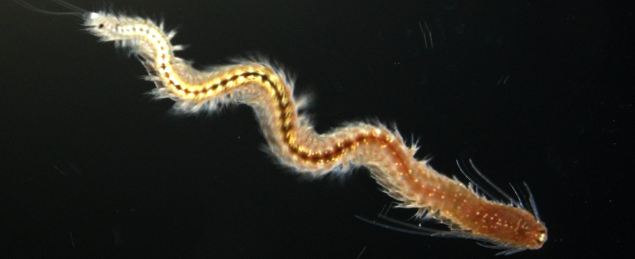
We're way behind several species when it comes to regeneration, and scientists are keen to discover the secrets of these other animals so we can learn from them – including, in a new study, the marine worm platynereis dumerilii.
These worms are experts in regeneration – they can survive losing a large chunk of their bodies – and now we have a better idea of how they're doing it: specialized cells near a wound are reverting to their original stem cell-like form, before adapting again to replace lost tissue.
Regeneration in most species is handled by stem cells, which develop into whatever type of cells are needed. However, when the end segment of Platynereis is removed, multiple populations of other cells are recruited to swiftly restore the missing body section.
It's a process called dedifferentiation, and we've seen it in other species too. The study authors, led by researchers from the University of Vienna in Austria, have identified how the worms essentially roll back the state of other cells so they can be repurposed.
"This means that these cells begin to return to a stem cell-like state within just a few hours in order to build up a new growth zone as quickly as possible," says molecular biologist Leonie Adelmann, from the University of Vienna.
The reprogramming of human cells is an emerging field of science that promises major improvements in medical treatments. Being able to control how cells turn into specialized types could be used to treat disease and repair significant damage to the body.
This study points to some links across species that we could one day make use of.
The team used two advanced genetic analysis techniques – single-cell RNA sequencing and mosaic transgenesis – to figure out how individual cells were behaving and changing between states to repair damage done in the worms in the lab. It enabled them to track where the cells came from, and what type of cells they ended up as.
"We discovered at least two different stem cell populations – one that regenerates tissues such as epidermis and neurons, and another that forms muscles and connective tissue," says Adelmann.
Our own bodies do of course have fantastic healing properties built right in, but major injuries, disease, and old age can all put limits on human regeneration. The dedifferentiation process observed here and in other species could help us to push some of those limits, especially as scientific analysis methods improve.
"The concept of dedifferentiation was suggested over 60 years ago, but researchers then lacked the tools to test this idea," says molecular biologist Florian Raible, from the University of Vienna.
"Now, we've developed tools to understand dedifferentiation at a molecular level, providing a foundation for future studies."
Reality Of Islam |
|
Keeping sil
Two experim
Changing a
Plants are
 9:3:43
2018-11-05
9:3:43
2018-11-05
10 benefits of Marriage in Islam
7:5:22
2019-04-08
benefits of reciting surat yunus, hud &
9:45:7
2018-12-24
advantages & disadvantages of divorce
11:35:12
2018-06-10
6:0:51
2018-10-16
al-hussain (peace be upon him)
10:18:1
2022-09-21
10:55:53
2022-06-13
the happy life of mankind requirement
6:36:36
2022-01-25
12:47:1
2022-12-20
3:42:22
2021-12-24
8:4:21
2022-01-08
11:34:48
2022-06-29
5:41:46
2023-03-18
| LATEST |
 HOME
HOME