الوضع الليلي


 11:10:13
  2026-03-08
  1914
1914
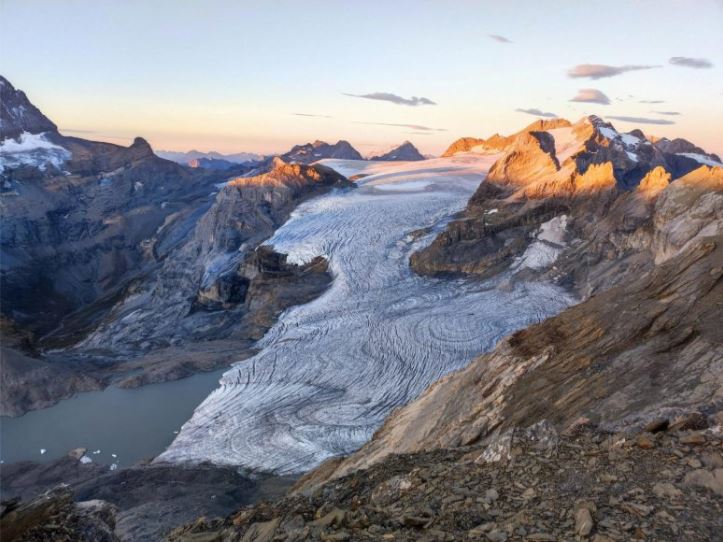
Even during the United Nations International Year of Glaciers’ Preservation, Switzerland’s glaciers continued to shrink dramatically. A snow-poor winter was followed by intense heat waves in June 2025, pushing ice loss close to the record-breaking levels seen in 2022. By early July, the winter snowpack had already melted away, exposing the ice beneath far earlier than is typically observed. Cooler weather later in July slowed the damage, but the relief was temporary.
By the end of the year, Switzerland had lost nearly an additional three percent of its total glacier volume. That makes 2025 the fourth most severe year for glacier shrinkage, following 2022, 2023, and 2003. The year added to what is now the fastest decade of glacier loss ever recorded in the country. Since 2015, glaciers across Switzerland have lost about a quarter of their total volume, and more than 1,000 smaller glaciers have already vanished completely.
Major Ice Thickness Reductions Across Key Glaciers
In many areas, the seasonal snow cover melted all the way up to the highest elevations. As a result, glaciers such as the Claridenfirn (Canton of Glarus), the Plaine Morte Glacier (Canton of Bern), and the Silvretta Glacier (Canton of the Grisons) thinned by more than two meters. In southern Valais, glaciers, including the Allalin Glacier and the Findel Glacier, experienced smaller but still significant losses of roughly one meter.
Snow-Poor Winter and Extreme Summer Heat
The winter of 2024/2025 brought unusually low snowfall. Reduced precipitation combined with the third warmest winter half-year (October to March) since records began led to exceptionally shallow snow depths. Parts of northern and central Grisons received less fresh snow than ever previously measured. By the end of April, glaciers held about 13 per cent less snow compared to the average from 2010 to 2020.
June then became the second warmest on record, accelerating snowmelt even at the highest elevations. Although July turned cooler and wetter, August delivered another heatwave. During that period, the zero-degree line rose above 5,000 meters in some areas, contributing to an overall warmer-than-average summer. A few cold fronts between July and September briefly brought fresh snow above 2,500 m above sea level, but lasting snow cover persisted only at the highest mountain peaks.
Glacier Retreat Increasing Mountain Instability
“The continuous diminishing of glaciers also contributes to the destabilising of mountains,” says Matthias Huss, Director of GLAMOS. “This can lead to events such as in the Lötschental valley, where an avalanche of rock and ice buried the village of Blatten.”
Reality Of Islam |
|
Two experim

Changing a
Plants are

After spend
 9:3:43
2018-11-05
9:3:43
2018-11-05
10 benefits of Marriage in Islam
7:5:22
2019-04-08
benefits of reciting surat yunus, hud &
9:45:7
2018-12-24
advantages & disadvantages of divorce
11:35:12
2018-06-10
6:0:51
2018-10-16
6:14:17
2018-06-21
12:10:56
2022-11-17
7:6:7
2022-03-21
8:4:21
2022-01-08
8:15:37
2023-02-16
2:11:12
2022-10-15
9:42:16
2022-10-19
5:41:46
2023-03-18
| LATEST |
 HOME
HOME