الوضع الليلي


 11:12:51
  2026-03-30
  1441
1441
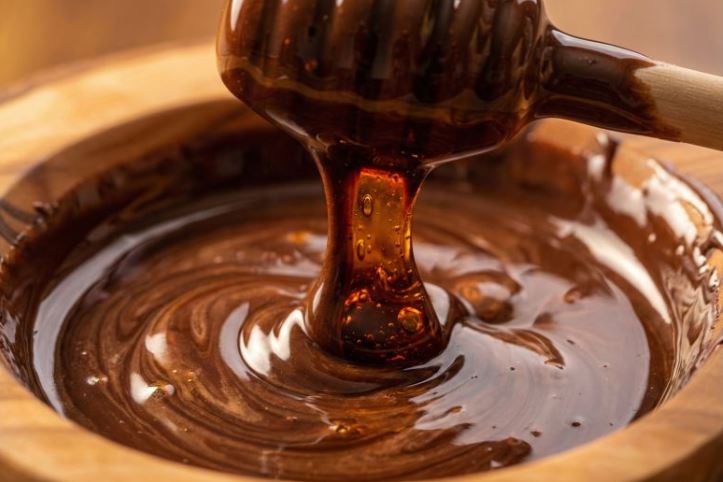
Researchers used a product made by native stingless bees to recover bioactive compounds, including caffeine, from chocolate manufacturing waste. The method increases the nutritional and commercial value of a material that is typically discarded.
Researchers at the State University of Campinas (UNICAMP) in São Paulo, Brazil have created a new product that blends honey from native stingless bees with cocoa bean shells, a byproduct of chocolate manufacturing.
The resulting mixture can be eaten on its own or incorporated into foods and cosmetic formulations. Their findings were published in ACS Sustainable Chemistry & Engineering, which highlighted the study on its cover.
Turning cocoa waste into value
Instead of using conventional chemical solvents, the team relied on native bee honey as an edible extraction medium. Using an ultrasound-assisted process, they were able to draw out stimulant compounds such as theobromine and caffeine from cocoa bean shells.
These compounds are often associated with cardiovascular benefits. Cocoa shells are typically discarded during chocolate production, but in this case, they became a source of valuable ingredients. The extraction method also increased the honey’s content of phenolic compounds, which are known for their antioxidant and anti-inflammatory effects.
Early tastings suggest that the final product can develop a pronounced chocolate flavor depending on the proportion of honey to shells, although formal evaluations of taste, aroma, and texture are still planned. “Of course, the biggest appeal to the public is the flavor, but our analyses have shown that it has a number of bioactive compounds that make it quite interesting from a nutritional and cosmetic point of view,” says Felipe Sanchez Bragagnolo, the study’s first author. He carried out the research during his postdoctoral work at the Faculty of Applied Sciences (FCA) at UNICAMP in Limeira with a scholarship from FAPESP.
The team has patented the extraction process and is working with INOVA UNICAMP, the university’s innovation agency, to identify industry partners interested in licensing the technology and bringing the product to market.
Native honey drives sustainable extraction
Beyond product development, the project also highlights the sustainable use of regional biodiversity. The researchers selected honey from native stingless bees because it typically contains more water and is less viscous than honey produced by European bees (Apis mellifera), making it more effective as a natural solvent.
They tested honey from five Brazilian species: borá (Tetragona clavipes), jataí (Tetragonisca angustula), mandaçaia (Melipona quadrifasciata), mandaguari (Scaptotrigona postica), and moça-branca (Frieseomelitta varia). The cocoa shells used in the experiments were supplied by the Comprehensive Technical Assistance Coordination Office (CATI) unit of the São Paulo State Department of Agriculture and Supply in São José do Rio Preto.
Mandaguari honey was initially chosen for process optimization due to its intermediate water and viscosity values. However, the optimized process was later used for the other honeys analyzed.
Bragagnolo points out that honey is highly susceptible to external influences, such as climate, storage conditions, and temperature. “Therefore, it’s possible to adapt the process to locally available honey, not necessarily mandaguari honey,” he says.
Ultrasound boosts green chemistry
Ultrasound-assisted extraction involves placing a probe, visually similar to a metal pen, inside a pot containing honey and shells. The probe uses sound waves to enhance the extraction of compounds from the shells, which then migrate to the solvent – in this case, honey.
This method is efficient because it creates microbubbles that implode and temporarily increase the temperature to break down the plant material. This technique is considered environmentally friendly in the food industry because it is faster and more efficient than other methods.
This was one of the positive points in another assessment included in the study, which measured the product’s sustainability. The Path2Green software was used. It was developed by a group led by Professor Mauricio Ariel Rostagno from FCA-UNICAMP, who is also Bragagnolo’s postdoctoral supervisor and coordinator of the study.
The tool verified compliance with 12 principles of green chemistry, such as transportation, post-treatment, purification, and application. Using an edible, local, ready-to-use solvent was one of the most important factors. On a scale of -1 to +1, the product scored +0.118.
“We believe that with a device like this, in a cooperative or small business that already works with both cocoa and native bee honey, it’d be possible to increase the portfolio with a value-added product, including for haute cuisine,” Rostagno suggests.
Toward safer, longer-lasting honey products
The researchers are preparing new studies to evaluate the effect of ultrasound on honey microbiology. As with plant material, the method breaks down the cell walls of microorganisms, such as bacteria, that can degrade the product.
“Honey from native bees usually needs to be refrigerated, matured, dehumidified, or pasteurized, unlike honey from European bees, which can be stored at room temperature. We suspect that, simply by being exposed to ultrasound, the microorganisms contained in the honey are eliminated, increasing the stability and shelf life of the product,” he explains.
In the future, they will test other applications using honey from native bees as a solvent for ultrasound-assisted extraction, such as processing other plant residues.
Reality Of Islam |
|
Two experim
Changing a
Plants are

After spend
 9:3:43
2018-11-05
9:3:43
2018-11-05
10 benefits of Marriage in Islam
7:5:22
2019-04-08
benefits of reciting surat yunus, hud &
9:45:7
2018-12-24
advantages & disadvantages of divorce
11:35:12
2018-06-10
6:0:51
2018-10-16
11:11:59
2023-02-01
3:43:50
2022-11-05
5:57:34
2023-03-18
6:28:21
2022-12-20
9:42:16
2022-10-19
8:25:12
2022-03-09
7:45:39
2018-06-21
5:41:46
2023-03-18
| LATEST |
 HOME
HOME