الوضع الليلي


 12:57:36
  2023-07-07
  1285
1285
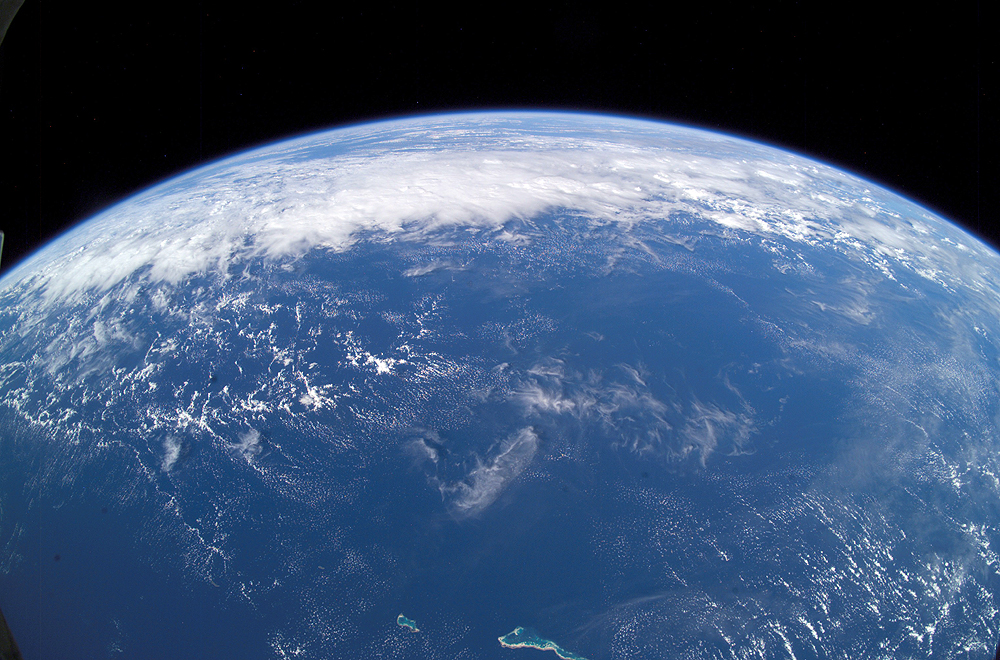
Although 71% of the Earth's surface is covered with water, science has not yet been able to accurately answer the main question: Where did this water come from in the first place?
Over the years, scientists have proposed several theories, most notably the arrival of water on asteroids to Earth producing its own early water.
Now, scientists from the California Institute of Technology have taken a major step toward solving the mystery. The team claims that the Earth was formed from dry building blocks of rock, indicating that its water must have arrived much later in the planet's formation.
The team explained: "A major addition of volatiles necessary for life, including water, occurred during the last 15% (or less) of Earth's formation.
Earth's history goes back about 4.5 billion years, and scientists are still trying to understand the processes by which our planet was formed.
One of the easiest ways for scientists to explore this formation is to examine the magma that flows deep in the Earth's interior.
And while we cannot easily venture into the depths of our planet, magma deep within the Earth eventually makes its way to the surface, in the form of lava. The mother (original) magma of these lavas can originate from different depths within the Earth, such as the upper core, which begins about 15 km (9 miles) below the surface and extends 680 km (422 miles), or the lower core, which extends from deep 680 km (422 miles) down to the core-core boundary about 2,900 km (1,800 miles) below our feet, according to the scientists' statement.
"Like sampling different layers of a cake, scientists can study magma originating from different depths to understand the different flavors of Earth's layers: the chemicals within them and their ratios in relation to each other," the scientists added.
The earth did not form immediately, instead it gathered together as material that fused over time. This means that the lower mantle and upper mantle could provide different clues to what was going on during Earth's formation.
In the new study, the team found a lack of volatiles, chemicals that, including water, can easily evaporate deep into the planet. However, the upper core was found to be abundant in volatiles.
This indicates that the Earth was formed from hot, dry rocky material, and that water came to our planet later, according to the team.
Scientists hope the findings will help unlock the mystery of how Earth formed, as well as other rocky planets in our solar system.
Dr François Tissot, who led the study, said: "Space exploration for exoplanets is really important because the water world is probably the best place to look for extraterrestrial life."
Reality Of Islam |
|

Moving with
A cobalt al

A wearable

Modern comp
 9:3:43
2018-11-05
9:3:43
2018-11-05
10 benefits of Marriage in Islam
7:5:22
2019-04-08
benefits of reciting surat yunus, hud &
9:45:7
2018-12-24
advantages & disadvantages of divorce
11:35:12
2018-06-10
6:0:51
2018-10-16
7:59:14
2018-06-21
6:14:3
2023-01-18
9:30:2
2021-11-12
9:50:37
2023-02-28
2:11:12
2022-10-15
allah will not answer all your prayers
6:56:28
2022-01-01
2:33:4
2023-02-15
5:41:46
2023-03-18
| LATEST |
 HOME
HOME