الوضع الليلي


 10:53:44
  2024-03-05
  1730
1730
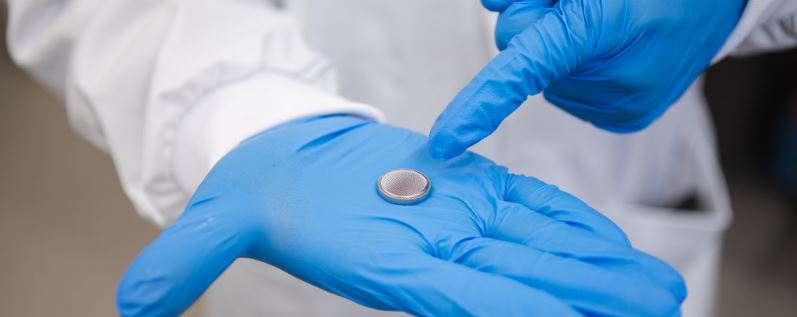
Water and electronics don't usually mix, but as it turns out, batteries could benefit from some H2O.
By replacing the hazardous chemical electrolytes used in commercial batteries with water, scientists have developed a recyclable 'water battery' – and solved key issues with the emerging technology, which could be a safer and greener alternative.
'Water batteries' are formally known as aqueous metal-ion batteries. These devices use metals such as magnesium or zinc, which are cheaper to assemble and less toxic than the materials currently used in other kinds of batteries.
Batteries store energy by creating a flow of electrons that move from the positive end of the battery (the cathode) to the negative end (the anode). They expend energy when electrons flow the opposite way. The fluid in the battery is there to shuttle electrons back and forth between both ends.
In a water battery, the electrolytic fluid is water with a few added salts, instead of something like sulfuric acid or lithium salt.
Crucially, the team behind this latest advancement came up with a way to prevent these water batteries from short-circuiting. This happens when tiny spiky metallic growths called dendrites form on the metal anode inside a battery, busting through battery compartments.
Although the new technology is unlikely to replace lithium-ion batteries any time soon, with further research and development, water batteries could provide a safe alternative to lithium-ion ones in a decade or so, says lead author, chemical scientist Tianyi Ma of RMIT University in Melbourne, Australia.
Lithium-ion batteries, which are found in everything from laptops and phones to electric bikes and cars, can overheat and catch on fire in extreme cases. This is because lithium is quite an active metal, which is submerged in an organic electrolyte.
Owing to these safety concerns, researchers have long been trying to devise batteries that use different materials but produce the same performance and have similar longevity.
A major hurdle to using aqueous metal-ion batteries has been dendrite growth. To inhibit this, the researchers coated the zinc anode of the battery with bismuth metal, which oxidizes to form rust. This creates a protective layer that stops dendrites from forming.
The feature also helps the prototype water batteries last longer, retaining more than 85 percent of their capacity after 500 cycles, the researchers' experiments showed.
According to Royce Kurmelovs at The Guardian, the team has so far developed water-based prototypes of coin-sized batteries used in clocks, as well as cylindrical batteries similar to AA or AAA batteries.
The team is working to improve the energy density of their water batteries, to make them comparable to the compact lithium-ion batteries found inside pocket-sized devices.
Magnesium is their preferred material, lighter than zinc with a greater potential energy density. Ma says if magnesium-ion batteries can be commercialized, the technology could replace bulky lead-acid batteries within a few years.
Lead-acid batteries have a low energy density and are used to start petrol or diesel car motors and in large-scale grid energy storage. However, because they contain lead and hazardous acids, they cannot be disposed of and must be recycled at specialist facilities.
Recycling or reusing lithium-ion batteries is also a top priority given projected increases in demand for the batteries and the metals used to make them, as the world electrifies its energy system to phase out fossil fuels and combat climate change.
"Addressing end-of-life disposal challenges that consumers, industry, and governments globally face with current energy storage technology, our batteries can be safely disassembled and the materials can be reused or recycled," Ma says.
In terms of practical applications, the researchers hooked their battery design up to a solar panel and a 45-watt solar light, which the battery kept illuminated for 12 hours after a day's charge. It's a small-scale demonstration of the potential of 'water batteries' to be used for renewable energy storage, which should encourage more research.
Reality Of Islam |
|
Moving with
A cobalt al

A wearable
Modern comp
 9:3:43
2018-11-05
9:3:43
2018-11-05
10 benefits of Marriage in Islam
7:5:22
2019-04-08
benefits of reciting surat yunus, hud &
9:45:7
2018-12-24
advantages & disadvantages of divorce
11:35:12
2018-06-10
6:0:51
2018-10-16
10:55:53
2022-06-13
5:58:12
2021-12-18
1:16:44
2018-05-14
8:21:9
2018-06-21
bahlool & the throne of haroun rashid
8:20:35
2018-06-21
9:30:2
2021-11-12
8:15:37
2023-02-16
5:41:46
2023-03-18
| LATEST |
 HOME
HOME