الوضع الليلي


 1:18:3
 2026-11-09
 41
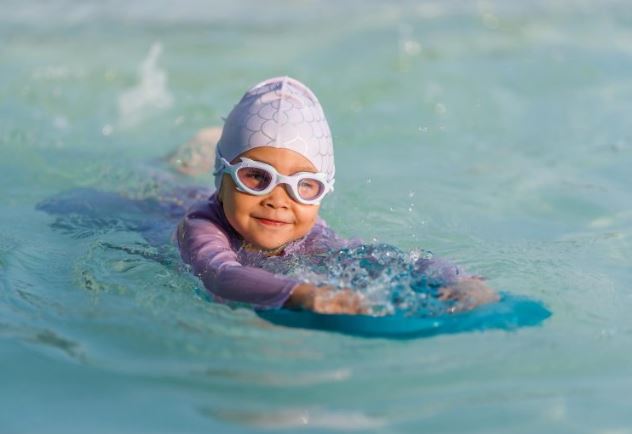
Children who learn to swim early may have a head start in classroom skills, with research finding developmental advantages even after accounting for socioeconomic background.
When family budgets tighten, swimming lessons can be among the first expenses to go. Most swim schools operate as commercial businesses, and cost is the biggest barrier to participation. Yet the consequences of missing out may extend beyond water safety and fitness to the skills children need when they start school.
A four-year study involving nearly 7,000 survey respondents and individual testing of 177 children suggests that children who learn to swim early have developmental advantages over their peers. Participants younger than 5 could be 5 to 18 months ahead of typical milestones in literacy, numeracy, and following instructions compared with the general population of children their age. Those advantages remained when socioeconomic background was taken into account.
Robyn Jorgensen, Emeritus Professor at the University of Canberra in Australia, examines and expands on the research in her new book, Why Young Children Should Learn to Swim.
Swimming may offer a classroom head start
Jorgensen does not interpret the findings as evidence that children who learn to swim are innately smarter. Instead, she argues that lessons develop skills and habits children can carry into the classroom. A child counting kicks from one to ten with an instructor, for example, is practicing number sequencing and one-to-one correspondence, matching each number to a single action.
The project grew out of a conversation between Jorgensen and Laurie Lawrence, an Olympic swim coach inducted into both the Australian and U.S. Swimming Halls of Fame. Lawrence thought children who learned to swim early generally seemed more “school-ready.”
“There was no formal evidence to support this observation, but it was one that Laurie felt he and many others in the swim industry observed,” Jorgensen explains.
To investigate that “industry hunch,” Jorgensen and her colleagues used the Peabody Developmental Motor Scales and Woodcock-Johnson III assessments. These internationally recognized testing tools were normed against national census data, providing reference standards for comparing the children’s performance with that of the wider population.
The results surprised even Jorgensen, who said, “My early observations of the young learners piqued my interest while retaining some sense of skepticism about what could be achieved. I am not from a swimming background, so had no vested interest in the ‘proving’ or otherwise of Laurie’s hunch. My only interest in swimming was as a grandparent and around water safety for my children and grandchildren, and as a recreational activity.”
Beyond the literacy and numeracy findings, the research suggests that early swimming participants are more sociable and have measurable advantages in cognitive development, language skills, and emotional regulation. These findings point to potential benefits for academic success.
“It is reasonable to claim that swimming prepares children for the schooling years, particularly the early years and the transition into schooling,” Jorgensen explains.
Costly lessons and faraway pools
Access to those potential benefits is sharply unequal. Jorgensen’s analysis identifies the United States and China as having the greatest inequities in access, with regular swimming lessons affordable only to very affluent families. Singapore, Australia, Brazil, and South Africa also face substantial economic and geographic barriers.
One respondent from Zimbabwe described how lessons compete with basic necessities. “So swimming is still seen in Africa in general as elite. But basically, if you are a working-level person well below average, swimming lessons will not be a priority; what will be a priority is feeding your family.”
Even reaching a pool can be difficult. In Australia, families on remote farming properties can face journeys of hundreds of kilometers to the nearest one. The study describes “a double whammy” for children from low-income and rural communities, who are both the least likely to have access to lessons and the most at risk of drowning.
The case for subsidizing swimming lessons
With cost-of-living pressures affecting families worldwide, Jorgensen is calling for broader government support. She argues that governments have both a moral and a financial incentive to intervene, given the billions they already spend trying to close gaps in school achievement.
“What this study has shown is that even when socioeconomic backgrounds are accounted for, children who participate in quality lessons achieve better than the general population. It would make sense for the government to consider investing in providing or subsidizing early years swimming for families who would otherwise be excluded from participation in early years swimming lessons,” Jorgensen explains.
“Investing in quality swimming lessons would make a politically wise move. The cost of lessons can be quite high, but if policies were created to offer subsidies for parents or to create swim programs for disadvantaged families, there is considerable potential for adding capital to these cohorts of learners,” she explains.
Reality Of Islam |
|

Tiny magnet

Researchers

Keeping sil

Two experim
 9:3:43
2018-11-05
10 benefits of Marriage in Islam
7:5:22
2019-04-08
benefits of reciting surat yunus, hud &
9:45:7
2018-12-24
advantages & disadvantages of divorce
11:35:12
2018-06-10
6:0:51
2018-10-16
6:14:3
2023-01-18
8:30:23
2022-03-03
11:11:59
2023-02-01
7:34:7
2023-02-28
10:43:56
2022-06-22
1:38:41
2021-12-08
10:35:40
2022-05-26
5:41:46
2023-03-18
| LATEST |
 HOME