الوضع الليلي


 9:56:53
  2024-01-24
  1413
1413
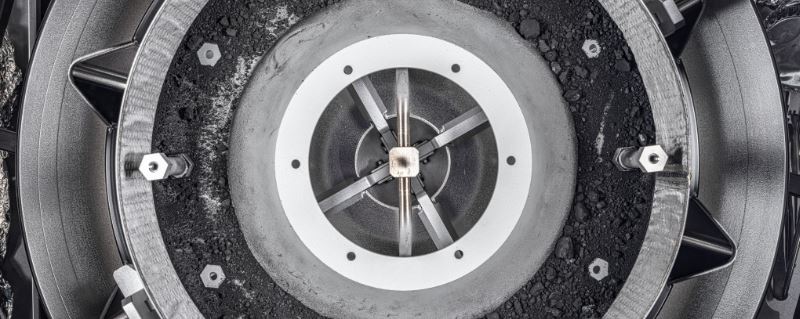
We finally have the first high-res images of the contents of NASA's precious Bennu asteroid sampler container, more than 3.5 months since the OSIRIS-REx returned them to Earth.
The delay is due to two pesky fasteners that were holding the sampler lid in place, and were finally opened on January 10.
On January 19, NASA released the long-awaited first images of the sampler's contents – black dust and rocks up to around 1 cm (0.4 inch) in size.
The contents may look pretty ordinary, but don't forget you're looking at asteroid material that is thought to have remained untouched for some 4.5 billion years, and could shed new light on the origins of our Solar System.
The sample was dropped off during OSIRIS-REx's flyby of Earth on September 24.
Although the outer capsule opened pretty easily, giving scientists access to 70 grams (2.48 ounces) of asteroid dust, the main TAGSAM head containing the majority of the sample remained tightly sealed against the team's efforts.
Now that it's open, the team will spend the next few weeks determining the mass of the final sample they've now been able to access.
The next step is for the team to remove the round metal collar you can see in the image, and prepare to transfer the remaining sample from the Touch-and-Go-Sample-Acquisition-Mechanism (TAGSAM) head into pie-wedge sample trays.
These trays will then be photographed and the sample weighed, packed, and stored at NASA's Johnson Space Center in Houston.
Once a full catalog of Bennu samples is released later this year, scientists around the world will submit requests to either display or research the samples.
Importantly, 75 percent of the sample will be stored for future analysis.
"Finally having the TAGSAM head open and full access to the returned Bennu samples is a monumental achievement that reflects the unwavering dedication and ingenuity of our team," says astronomer Dante Lauretta of the University of Arizona Lunar and Planetary Laboratory on January 10.
"This success reaffirms the significance of OSIRIS-REx and our commitment to advancing our understanding of the cosmos. We eagerly anticipate the next chapter as we share these precious samples with the global scientific community and continue our journey of discovery."
OSIRIS-REx, now renamed OSIRIS-APEX, is currently on route to another asteroid, the potentially hazardous object Apophis. That rendezvous is due to take place in 2029.
Reality Of Islam |
|
Moving with
A cobalt al

A wearable

Modern comp
 9:3:43
2018-11-05
9:3:43
2018-11-05
10 benefits of Marriage in Islam
7:5:22
2019-04-08
benefits of reciting surat yunus, hud &
9:45:7
2018-12-24
advantages & disadvantages of divorce
11:35:12
2018-06-10
6:0:51
2018-10-16
12:10:56
2022-11-17
10:55:53
2022-06-13
allah will not answer all your prayers
6:56:28
2022-01-01
3:43:50
2022-11-05
8:21:9
2018-06-21
2:42:26
2023-02-02
bahlool & the throne of haroun rashid
8:20:35
2018-06-21
5:41:46
2023-03-18
| LATEST |
 HOME
HOME