الوضع الليلي


 10:28:13
  2024-02-06
  1697
1697
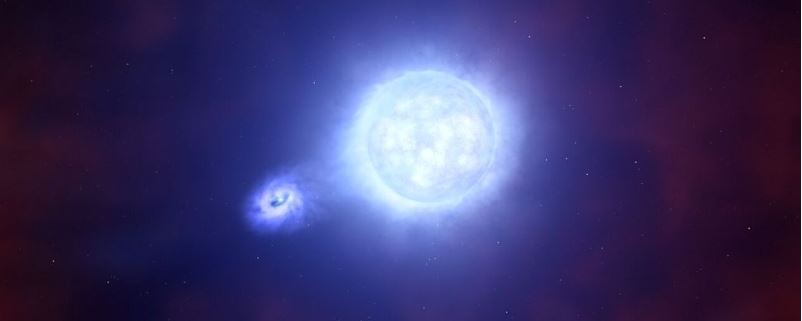
In a magnificent first, we finally have direct observational evidence of the stellar process that produces neutron stars and black holes.
From a supernova that exploded in a nearby galaxy, astronomers observed the emergence of something with the hallmarks of such compact objects. It's not clear which kind, neutron star or black hole, but the finding finally confirms that the core collapse of massive stars produces the densest objects in the Universe, in a spectacular explosion of stellar material.
Stellar-mass black holes and neutron stars are thought to be the result of similar processes.
Towards the end of its lifespan, a star runs out of the fuel required to sustain fusion, the process that keeps it burning. There's a somewhat complicated series of events, but ultimately, the star will eject its outer material; the core, no longer supported by the outward pressure of fusion, collapses under gravity to become a super-dense object (for most stars, anyway).
The nature of that object depends on its mass. Stars smaller than eight Suns produce a white dwarf, the eventual predicted fate of the Sun itself.
If the precursor star was between about 8 and 30 times the mass of the Sun, the core collapses into a neutron star up to around 2.3 solar masses.
And the most massive stars, over 30 solar masses, become stellar-mass black holes.
Our understanding of this process, however, is largely based on observing the aftermath. For example, neutron stars in the Milky Way shining from within the remnants of the supernova explosion in which they were born, such as the famous Crab Pulsar, or Vela Pulsar (a pulsar is a type of neutron star).
We've not seen a supernova in the Milky Way for centuries. And even if we had, we might not be able to see what's left. The closest supernova in recent times, a star we saw explode in the Large Magellanic Cloud in 1987, has so much dust in the center that we can't see the core remnant presumed to be inside. Never mind the challenges of observing the results of a supernova millions of light-years away.
Or so we thought. Supernova SN 2022jli was first spotted last year, exploding in a spiral galaxy called NGC 157, just 75 million light-years away. Because there's so little we know about this process, scientists were immediately riveted, turning telescopes to NGC 157 to watch as the supernova brightened, peaked, and faded in the days and weeks and months ensuing.
This is normally a smooth process, resulting in a fading light curve that is pretty much an even line.
But SN 2022jli did something really weird. Following its peak, it didn't fade evenly, but with a periodic change in brightness. Every 12.4 days over the 200 days that scientists tracked it, the supernova brightened only to gradually dim.
"This is the first time," wrote a team led by astrophysicist Thomas Moore of Queen's University Belfast in a paper released last year, "that repeated periodic oscillations, over many cycles, have been detected in a supernova light curve."
Now, a second team led by astrophysicist Ping Chen of the Weizmann Institute of Science in Israel has figured out why.
Most stars, astronomers believe, are not loners, but have companion stars. The SN 2022jli star likely had a binary companion, too – one that survived the supernova, and remained in orbit with the now-exploded object.
Chen and his colleagues found bursts of gamma radiation and the movement of hydrogen in the place where the supernova took place. Their analysis found that the changes in brightness are probably caused by an interaction between the SN 2022jli remnant and the companion star. When the SN 2022jli ejected its outer material, it puffed up the companion star with hydrogen.
In the wake of the explosion, the orbit of the two objects brings the compact core remnant through the puffy atmosphere of the companion, where it slurps up a bunch of the hydrogen. As this hydrogen falls onto the remnant, it heats up, causing a glow.
The researchers don't know whether the object is a black hole or a neutron star. But they are confident that it is one of them. This means that SN 2022jli is the first supernova from which astronomers have been able to observe, in real time, the emergence of a compact object.
It's the culmination of decades of observation, analysis, and theory. From this point, our understanding of black holes and neutron stars can only grow stronger.
"Our research is like solving a puzzle by gathering all possible evidence," Chen says. "All these pieces lining up lead to the truth."
Reality Of Islam |
|
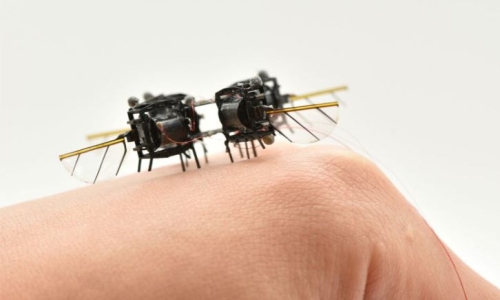
Moving with
A cobalt al

A wearable

Modern comp
 9:3:43
2018-11-05
9:3:43
2018-11-05
10 benefits of Marriage in Islam
7:5:22
2019-04-08
benefits of reciting surat yunus, hud &
9:45:7
2018-12-24
advantages & disadvantages of divorce
11:35:12
2018-06-10
6:0:51
2018-10-16
8:15:37
2023-02-16
6:14:17
2018-06-21
3:42:22
2021-12-24
4:25:57
2023-02-11
7:0:55
2022-05-17
7:45:39
2018-06-21
1:34:8
2022-02-01
5:41:46
2023-03-18
| LATEST |
 HOME
HOME